
Losing the Self: A Journey Into The Father's Dementia
This piece is written after witnessing the Play “The Father”, a hindi translation of the critically acclaimed script Le Père (The Father, in English) by French Playwright Florian Zeller. The Play was performed by Renaisstance Theatre Society in LTG Auditorium, Mandi House, New Delhi on 26th of April 2026, directed by Mohit Tripathi, with the script translated from English to Hindi by Neetika Tripathi.
-By Abaan
4/30/2026
Emotional Landscape and Cognitive Hollowing
Le Père is about the slow collapse and decomposition of reality from within the confines of one’s mind.
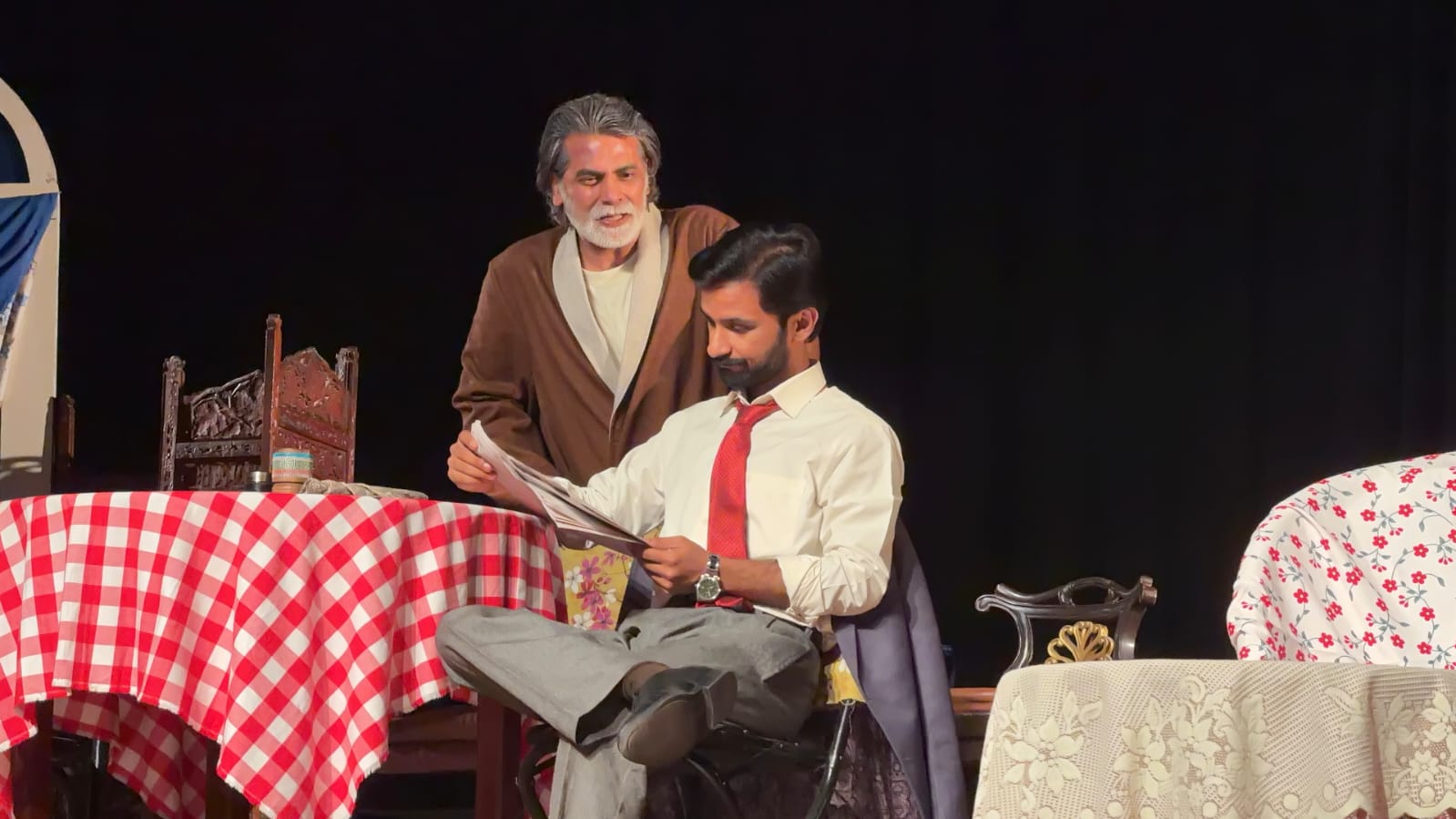
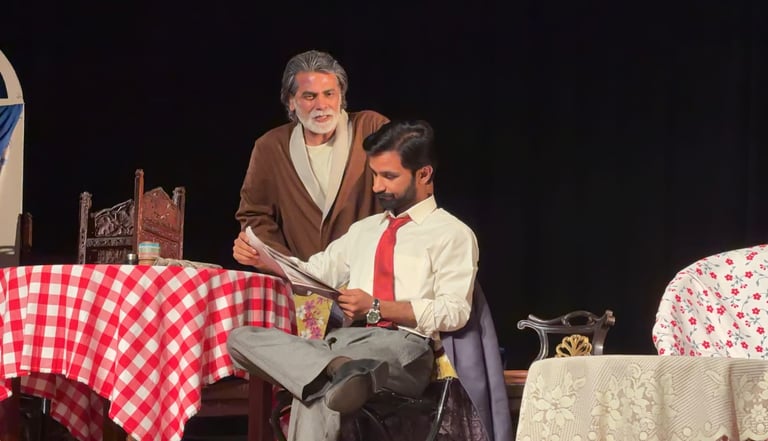
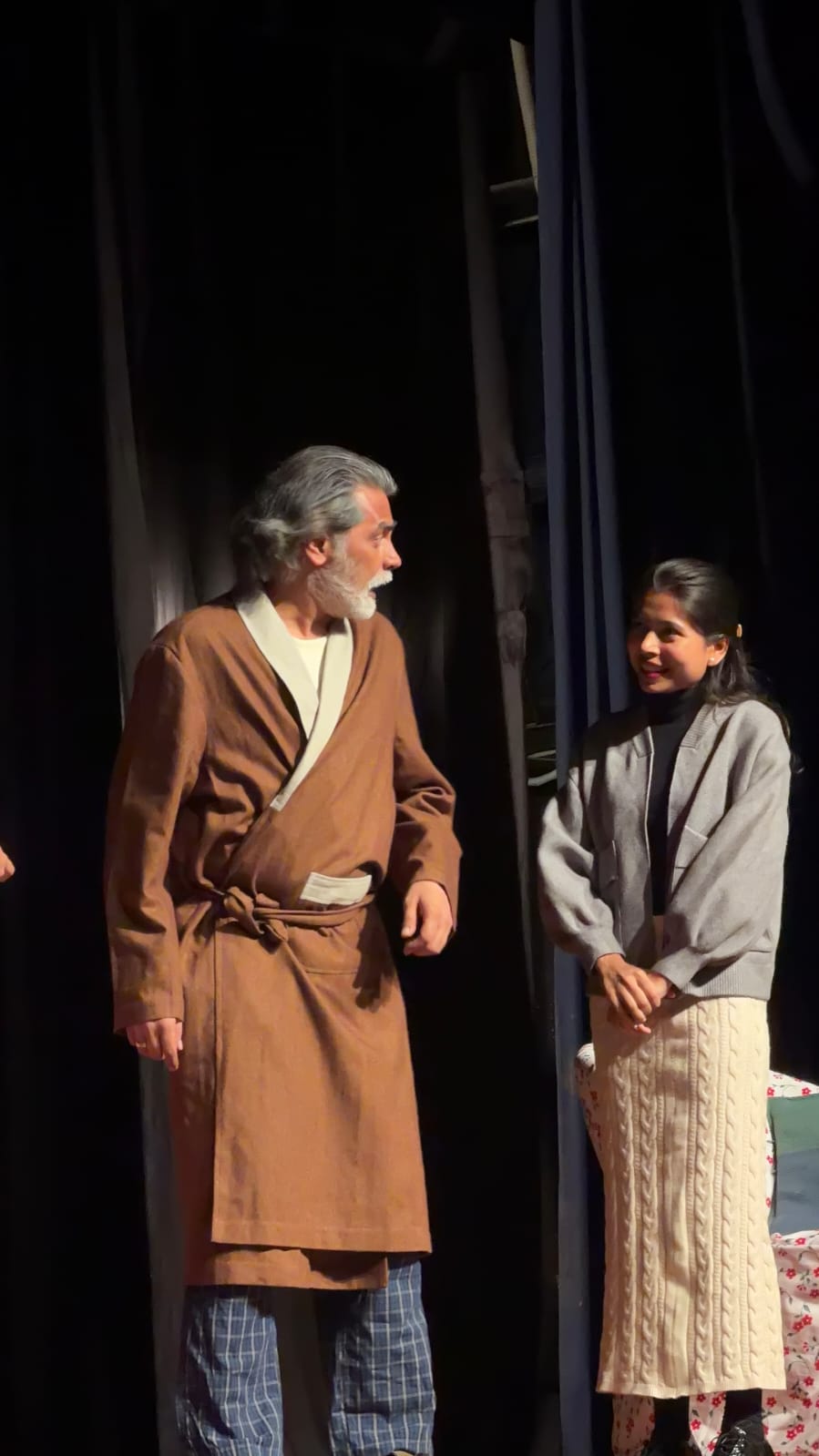
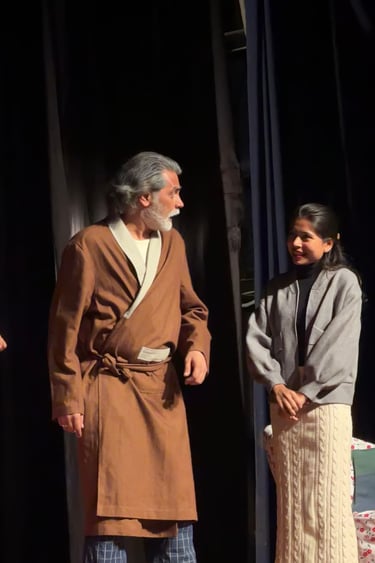
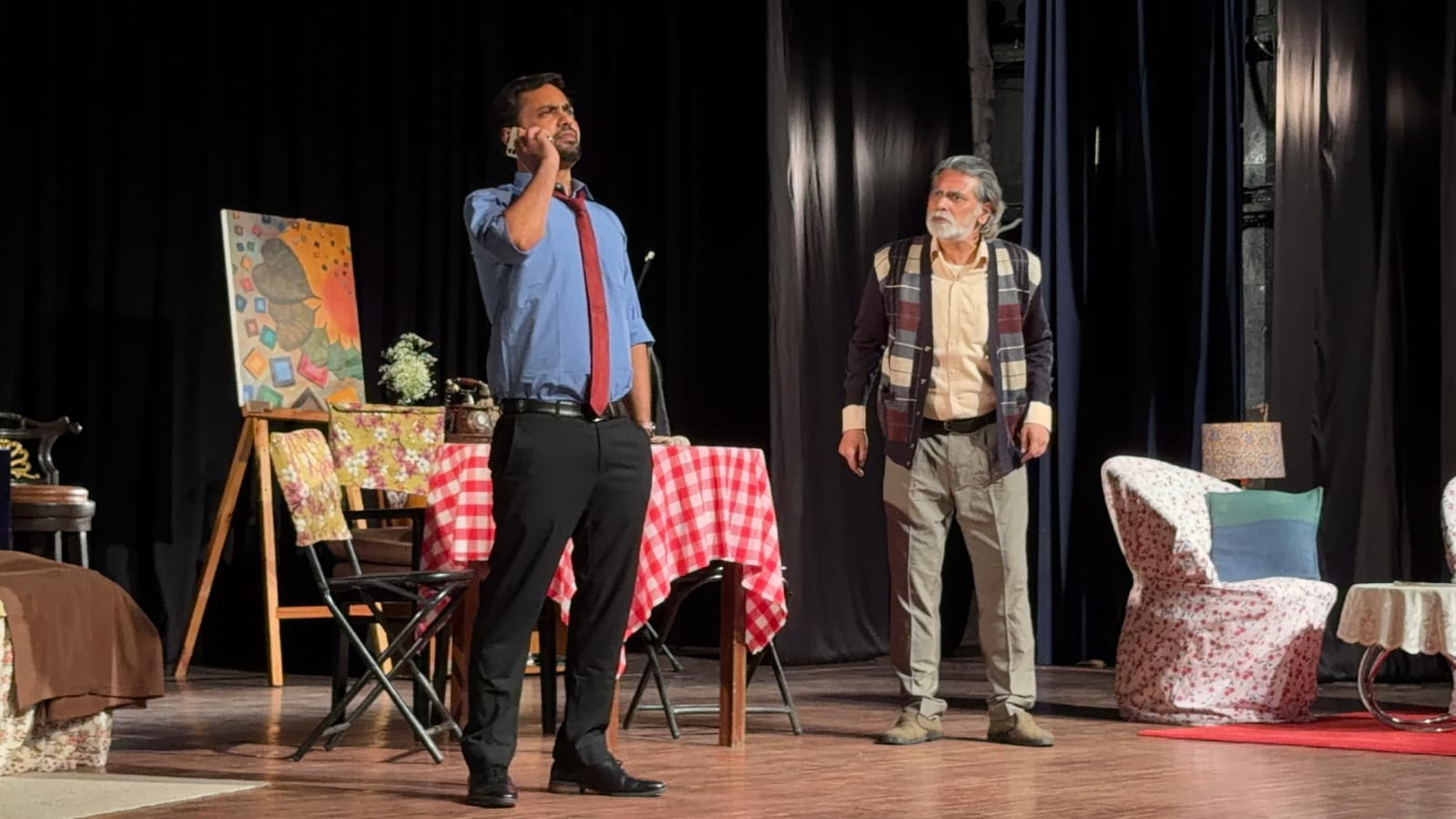
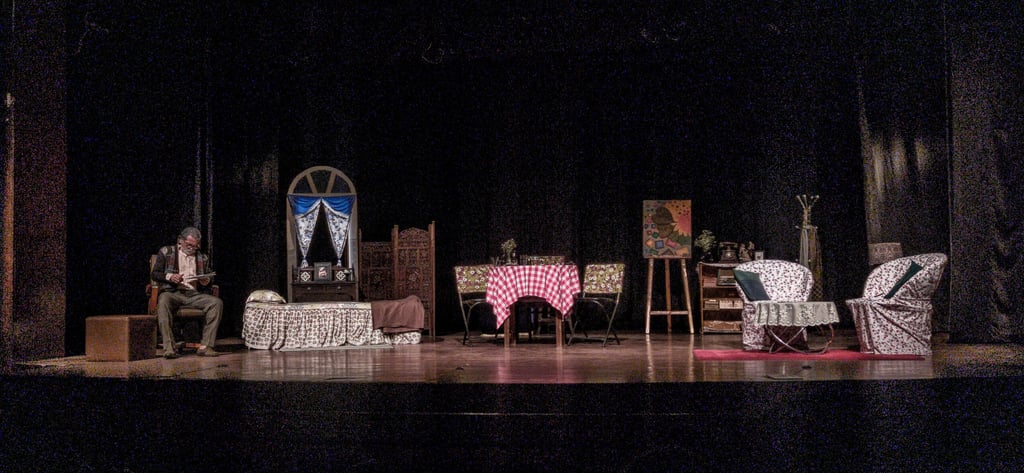
A diverse set of European furniture. Antique, all of it seems like. All of them are supposed to disappear in the coming minutes we witness. André is the one residing here. We get to meet his daughter, Anne, too.
The memories fade in, faces change, and confusion arises. This is the story of André, an unsettled, vulnerable, and terrified father of Anne, the middle-aged daughter, burdened with caretaking and ethical dilemmas. The play explores themes of loss and grief. Loss of cognition, displacement of the things and thoughts that were, and confusion of what André lives. A reality within which half a decade passes in an instant, and no one seems to understand what you’re going through. Memories mash with one another, paranoia arises over the events that André perceives- from being certain that a conspiracy is being brewed, to forgetting how his daughter looks. The sound design by Suresh Nath is excellent, working flawlessly with the pace set by the actors, crafting a cold ambience in which the audience only breathes, witnessing what could be them, if time allows.
A significant part of the confusion of André lay in the fact that he was not aware that he had dementia. Regardless, even if one is aware that they have dementia, they'll eventually forget that, too. A dead end arises, within which the daughter thinks only of comforting her father, dealing with the burden of caretaking. The role reversal of caretaking happened simultaneously with the desire for autonomy and dignity. I feel that the performance was objectively solid with the lighting, set, props and music working to compliment each other.
Performance Execution and Further Thoughts
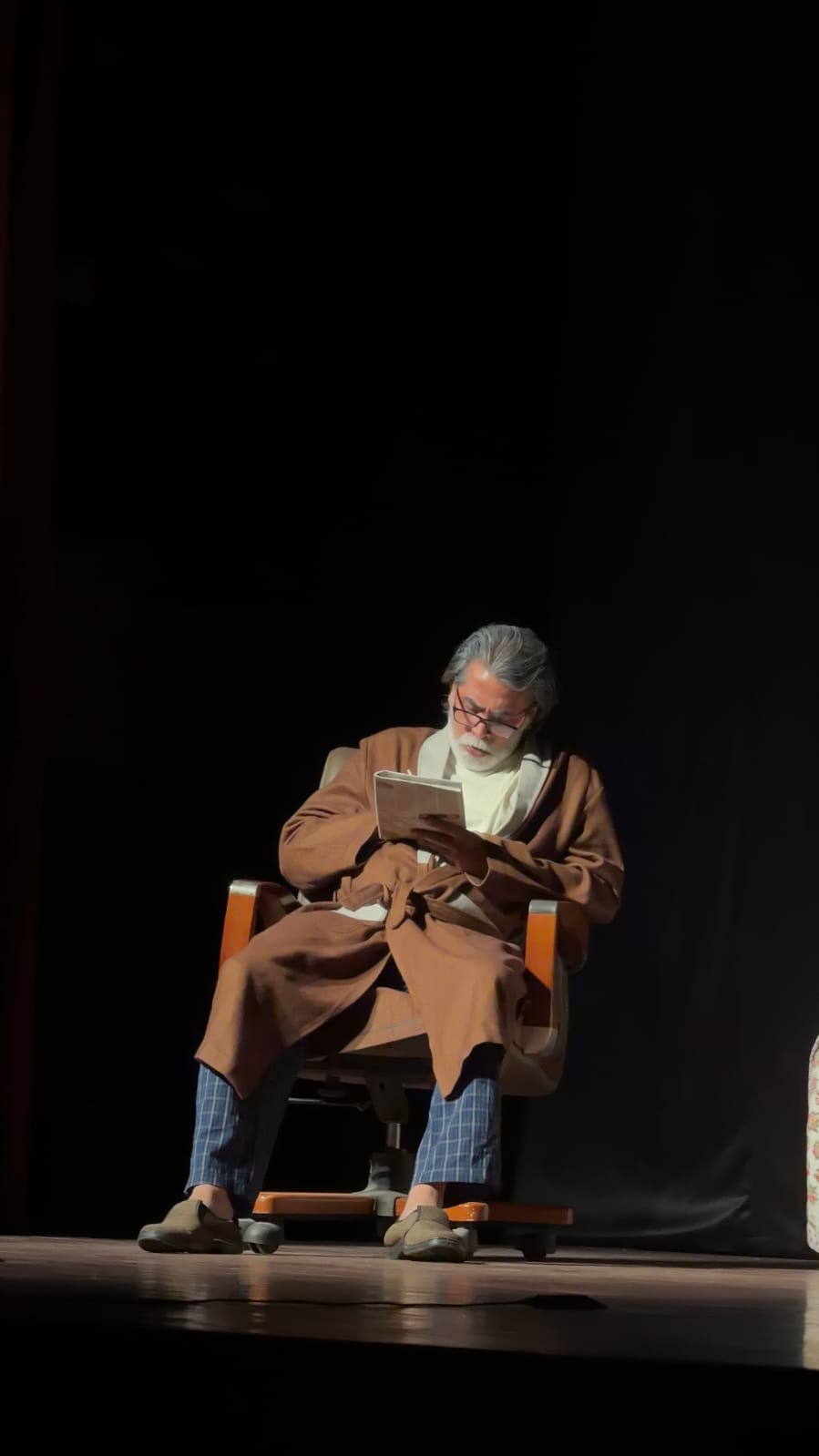
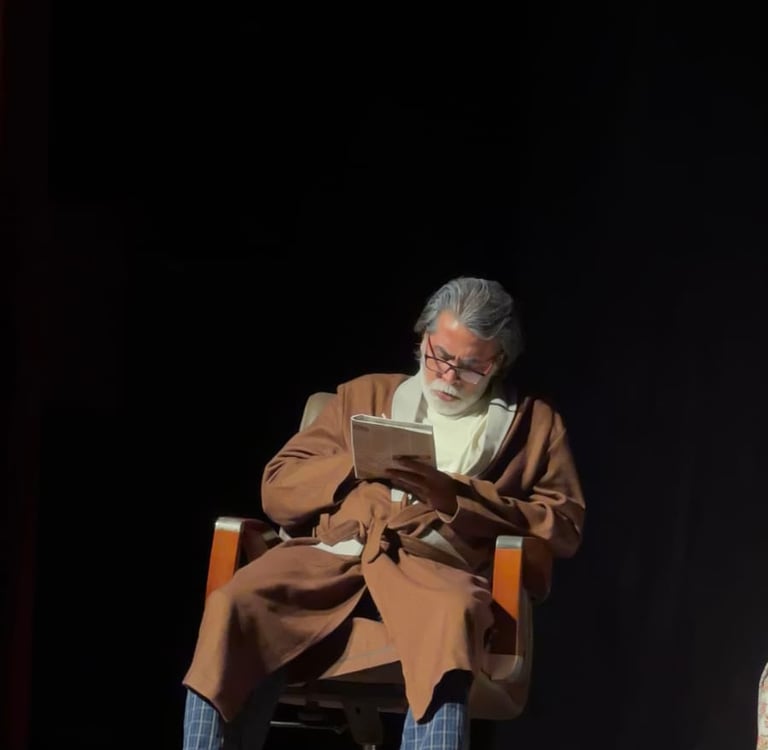
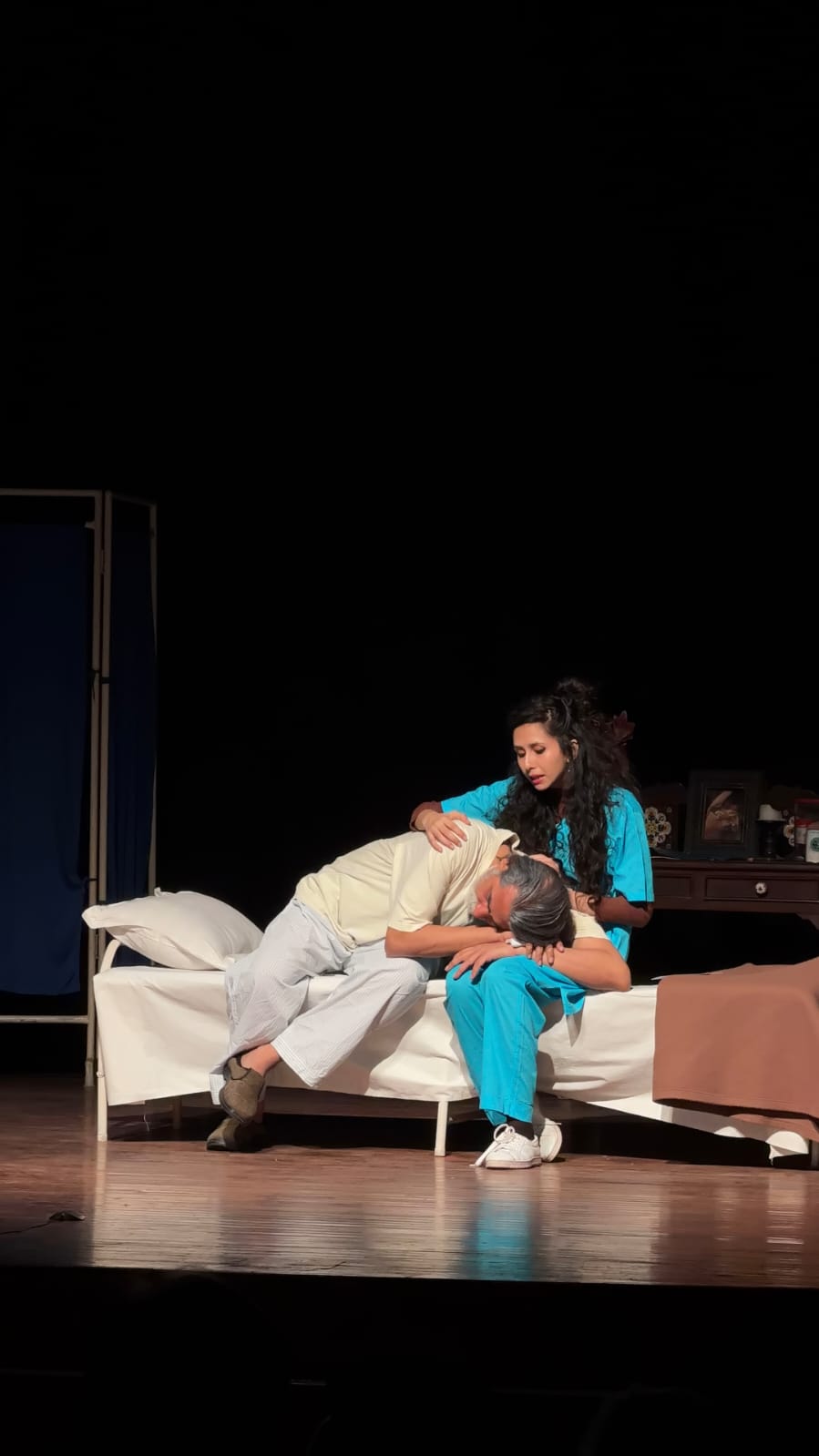
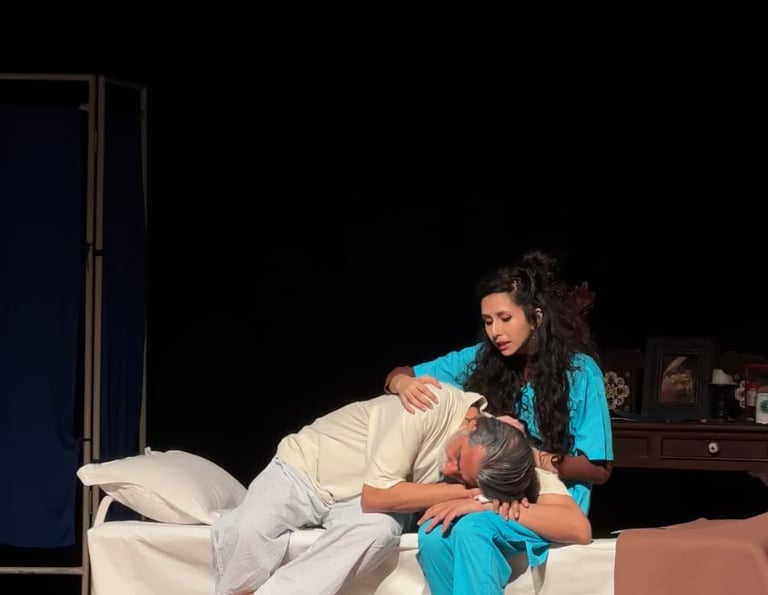
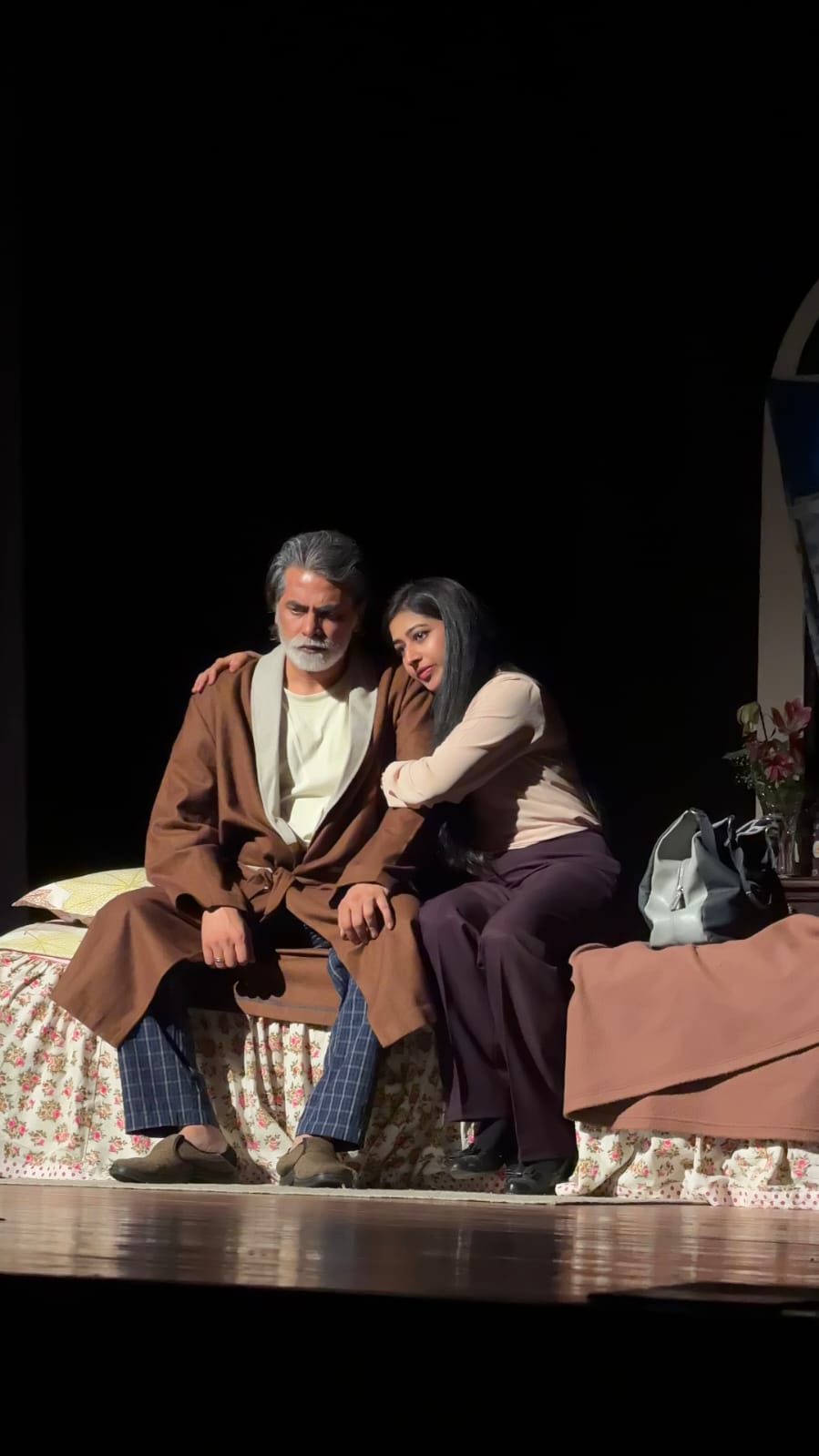
The set changes slightly with each major scene, with darkness used for transition. André keeps on losing his “cards”- he worries that he’ll lose everything with time- memories, belongings, and faces. He’s disoriented by the loss of the things, worried why his own home’s structure is changed without his permission. All of it affects Anne- burdened, exhausted and grieving, with frustration being primary for Pierre. Neetika Tripathi, Abhishek Kumar, and Divyanshu Trivedi carried out their roles excellently, receiving well-earned applause. Powerful lines delivered by Abhishek and Divyanshu still reflect in my mind. Mohit Tripathi, leading the play in the role of André, was iconic throughout. The infantilization that André faced from Laura, the Caretaker (Preeti Sharma), came to him from within when he lost all aspects of himself by the end, finding a maternal figure in the nurse (Sargam) in the nursing home. The trauma that he faces in his own house, he remembers and carries even in the nursing home. Memories get corrupted, faces change, and André loses all of his cards. Mohit, similar to his other projects, didn’t fail to command the fine thread, making the audience connect and remember the story.
The translation of the screenplay was tastefully done, and I felt the story was as captivating as intended by the playwright Florian Zeller. Lost in the non-linear, thrilling play, only when the play ended that the audience was finally able to understand what André had gone through. Teeth-wrenching, to say the least, was the constant reaction to Anne's burdens, dilemmas, and guilt for her ill father and impatient partner.
The play raises important thoughts, and it puts the viewer into one of the most probable situations of late adulthood. To put yourself in the shoes of Anne would be anxiety-inducing. A dilemma brews within you, for how to take care of one’s parent(s) once they have an illness which makes them lose the very essence of themselves, progressively making them a husk of their former self? Others get put in a different, yet probable hypothetical. When your cognition is degrading what would you expect from your next of kin?
Would you be content living in a nursing home, your demented mind filling in the gaps of your cognition? Or does your child, whose face you wont recognise, owe you their youth?
Questions of ethics arise for both parties, and people rarely plan for such a tragic scenario before it’s late.
Experiences Beyond
The play reminds one of “Everything At The End of Time" by the Caretaker, a project that speaks in a way that only cognitive degradation can. The set changes were analogous to the distortion in the six and a half hour project; 1940s ballroom music morphing into something else, multiple stages and subdivisions of stages with descriptions guiding the audience into dementia’s subjective expression using sound as the sole medium.
The story of The Father is equally that of Anne’s as it is of André. The play itself is capturing the phenomenon of the loss of self as it happens. Neurodegenerative diseases cannot be captured on screen, and they cannot be expressed to the healthy brain. Alzheimers ends with death, but the exact severity of the situation is explained by the ill only when the condition hasn’t worsened. As it worsens, abilities of all sorts vanish. William Utermohlen’s features disappearing as his self-portraits became progressively disturbing was caused by his Alzheimer’s progressing, crafting a legacy in his late years. André, on the other hand, was never accepting of his suffering.
I’d highly recommend that the individual be more aware of neurodegenerative diseases. Incidence, prevalence, contributing factors, and early screenings to test the illness are things to keep in mind.
Credits for the Play
Andre: Mohit Tripathi
Anne: Neetika Tripathi
Nurse: Sargam
Laura: Preeti Sharma
Pierre: Abhishek Kumar
Man: Divyanshu Trivedi
Playwright: Florian Zeller
Translated from English to Hindi: Neetika Tripathi & Mohit Tripathi
Light: Vipin Kumar
Music: Suresh Nath
Backstage: Ankit, Advik, Prateek, Gurjeet, Sunny, Mohit, Anuj, Divyansh, Suresh
About the writer
Mohit Tripathi as André.
Photo courtesy | Renaisstance Theatre Society.
Stills from the play.
Photo courtesy | Renaisstance Theatre Society.
Andre losing all his cards.
Photo courtesy | Renaisstance Theatre Society.
The initial set. Photo by Abaan.
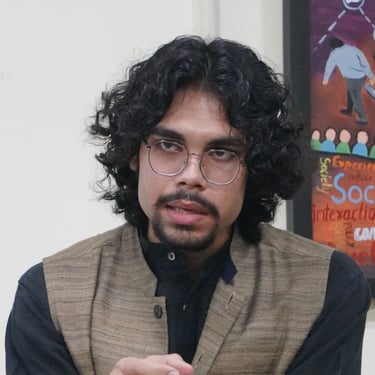
Abaan is a media geek, an avid theatre watcher and a voice-over artist pursuing a Bachelor’s in Social work. He is currently working in Media Processing and Production at Memorywala. As a writer he occasionally indulges in Reviews and Memoirs.
Contact
Let's bring your stories to life.
Phone
memorywalamail@gmail.com
+91 9818-098-790
Designed & Developed by Farah