
A week in the hills
Notes from Himachal. Not every memorable journey is defined by its destinations. Sometimes it is the people, places, and small incidents in between that leave the deepest impression.
- By Abaan
6/18/2026
A week would be the time we would spend hopping between Solan, Shimla, and Kasauli (the district, not the city). However our main destination was a small village by the name of Rauri, which was 12 Km from Dharampur. We were going to meet the theatre pedagogue-veteran actor Ms Amala Rai, batch of 1984, NSD. She currently conducts theatre workshops and has her own theatre education initiative APT (Amala’s Programme for Theatre) which she runs at her home, “BLISS”. Amala Rai is the daughter of H.C. Rai, the late veteran painter who is the Founder & Principal of the Government College of Fine Arts, Shimla. She’s one of the wittiest and most fun people that I have met. It was my pleasure to have conversed with her, and I look forward to meeting her once again. I hope to eventually cross paths with her husband, Mr Sunil Sinha (NSD batch of 1981), who had departed for a shoot in Mumbai shortly before this trip began and only returned once we had made our way back home. Amala Rai and Sunil Sinha are contemporaries of Irrfan, Ratna Pathak, Seema Biswas. In a vlog with Ashish Vidyarthi, Amala talks about how moving to a rural area in the hills was always the final plan for her, and that Sunil and her had decided that over 35 years ago. They had started preparing to move in 2014, and finally moved from Mumbai to Himachal Pradesh in 2020. Their priorities were never consumeristic or capital accumulating, and instead they focused on simplicity and doing things their way.

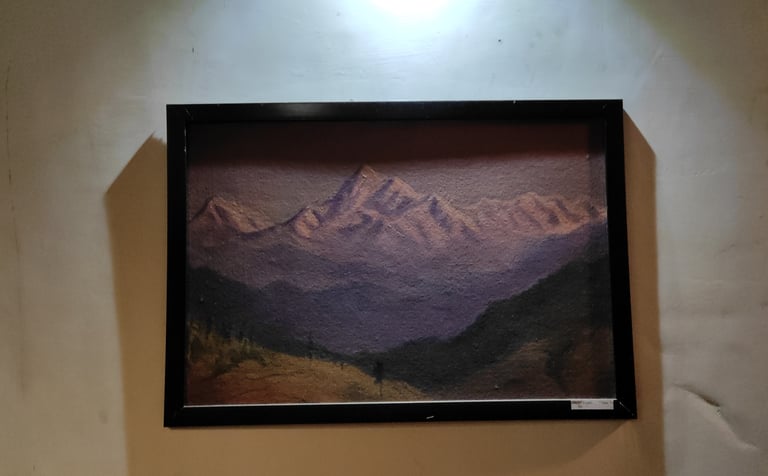
Painting by H.C.Rai father of Ms Amala Rai- Founder & Principal of the Government College of Fine Arts, Shimla.
This is a travel account of my trip to Dharampur, Solan and Shimla. A trip that me and my friend Siddhant planned- to the hills of Himachal, India. Siddhant is an IHM Hyderabad graduate and a childhood friend.
Come with me on a trip where I expected pleasant breezes and rainy hills. Instead, what I got was good (and bad) momos, pahadi kadhi, a beagle named Liaka, a man who crashed his scooty at midnight, conversations about childhood games I hadn't thought about in years, and a hotel room I nearly got locked out of. The hills, it turned out, were less interested in being scenic than in being lived in. This is an attempt to write down what that felt like before it fades.
Arriving at Amala Ma'am's
Dharampur was 20 km away. In the morning, she had asked me to call her up when I reached Dharampur, before boarding the bus for Rauri. So I did-and I was informed that we should get whatever groceries we needed. And so we did; we got enough dairy, vegetables, and fruits to last us a couple of days, and boarded the local bus for Rauri. The bus conductor was observant of our confusion since we were reliant on maps, and a certain glitch was showing a different place and a different path. He asked where we were going, and upon our mentioning the village, he instantly knew the spot. Abhinav was his name, and he asked everyone for their fare in the most polite manner with the softest “Haanji?” (Yes?). Our fare came out to be ₹20 per person. It was around 9 kilometers through a sandy, dusty road which had been in the works for the past five years-as told by the conductor. This road has caused significant health issues to Amala Rai over the past few years; the public letter to Vikramaditya Singh explains it better than I could.
Upon reaching the house of Amala Rai, where she conducts all of her theatre workshops, I stopped for a second to actually look at the building. The bus dropped us off a few meters before the house. Siddhant and I shuffled quickly, distributed the luggage that we had on our person equally, and proceeded to head inside Amala Rai’s home. A brown beagle welcomed us with friendly jumps and barks. Her name was Liaka. It's pronounced as Laika (लाईका). Amala Ma'am was already at the door waiting. She was a tall woman with short silverish hair with a height similar to mine. Her voice was pleasant to listen to, the pitch of which changed a lot depending on the top at hand. She had sleek glasses with a transparent frame. She was wearing a light cotton kurta which seemed apt for the warm weather.
May 15, 2026
The Bus That Wouldn't Cooperate
We kept our bags at the entrance. BLISS had a large hallway, with the right half being an open kitchen and the left half being the living room-a recliner, multiple sofas (both single and double), and a center table with vinyls, alongside large glass windows showing the valley and the road from which we came. Right in front of the entrance was the office and bedroom. To say the house was spacious would be an understatement. We were given a tour of the upstairs floor where we were supposed to stay. There was a huge balcony, and our room was a cozy double bed with a bookshelf. The season's harvest of onions was laid out in a corner near a window on the upstairs floor. There was also a small kitchen right beside the room, next to the balcony where we were supposed to sleep; we had dishes, a sink, a microwave, and a fridge right beside the kitchen space. There was a large bathroom as well. The bedroom, the kitchen, and the bathroom only took up about a fifth of the entire upstairs layout. The rest was the hall of the home and the large balcony.
Liaka accompanied us throughout the home tour, and then we came downstairs.
A Life Lived Outward
We sat on the sofa. Amala Ma'am made chai for us and asked about our journey. She told us that many weekends were spent commuting to Shimla during her NSD days. As a student, HRTC ordinary buses were the norm for her. Friday night at Kashmere Gate. Saturday morning Shimla. Saturday evening and Sunday with friends. Sunday night Shimla to Delhi bus, and Monday morning Kashmere Gate to Mandi House, heading straight to NSD classes. I'm sure the loo back then would have been more tolerable than now. This was the weekend schedule of Amala Rai many a time.
I remembered that there must be a bachelor's degree before the NSD diploma, so I asked. She completed a Bachelor's in Hindi (Honours) from Shimla, a Post Graduate Diploma in Acting from the Department of Indian Theatre at Panjab University, and then a Diploma from NSD. Kathak was something she pursued professionally from the 9th grade itself. It was her own resolve that she wanted to learn Kathak. When asked why specifically Kathak, Amala said enthusiastically, “Na apne ko kathak ka pata tha na kisi ka pata tha ye tha ki ghar se bahar rehne ko bahana chahiye toh chalo ye karlo, skating available thi toh skating kar li… jo karne ko mil jaaye jitna ghar se bahar reh le, and my parents never objected to that.”
I was reminded of the time when I took up skating in my early years simply because my crush in school also had skating as her extra-curricular of choice.
Remembering her childhood, Amala mentioned that even staying at home seemed just wrong to her parents, making them wonder if a conflict between her friends made her stay indoors, or if her mood was okay. Living on the tallest hill of Shimla, Jakhu Hill, she had to commute to the foothill of another hill for dance classes. There was also a skating rink along the commute. The morning routine consisted of charcoal, angeethi, and cooking. School until 4:00 PM, skating after reaching home and having food, then Kathak class after skating. Evenings were spent helping her mother with the food. All of this started at 4:00 AM-a habit which stuck with her. Talking about how her father encouraged her to take ordinary buses instead of AC deluxe buses, Ma'am exclaimed, “हमारे पिताजी बड़े सख्त ख़िलाफ़ थे सुविधाओं के। उफ़्फ़!” She explained how her father, H.C. Rai, who was the Founder-Principal of the Government Fine Arts College, Shimla, had his children carry coal home themselves, even though he had peons available. It seemed very laborious.
When we told Ma'am about our bus travel-which involved all passengers changing from an “AC” bus (it was a sauna) to an ordinary one due to a passenger falling sick-she was quite surprised at the driver and passengers' patience and understanding. She was proud of her state, saying that it's rare for multiple people to be so understanding of someone's well-being. I agreed with her; admittedly, it was a rare experience considering how I’ve seen the limits of rudeness being pushed by Delhiites.
Liaka started barking abruptly, then stopped just as quickly. The Shimla ghost stories book that I read a decade ago was still emotionally embedded in me, and what is 60 kilometers of curvy hill roads for a ghost? I was sure they could travel faster than cars right to the remote village of Rauri where I stayed, just to haunt me back to Kashmere Gate. But the thought dissipated the moment we realized a pigeon was near the hall window.
Sipping on the highly adult, low-sugar kadak chai, I listened to Amala Ma'am talk about her childhood in the school where her mother taught her. “She was extra strict on me just to prove that she was a fair teacher” was a sentence that lingered in my mind. At that moment, Amala Ma'am felt like a school classmate who was frustrated by a teacher who also happened to be their parent. It seemed as if the punishment of making a student stand out of class was never loathed by the students who were frequently sent outside, yet absolutely dreaded by students who were never given the “punishment” to begin with.
Remembering her time at Jakhu Hill, she appreciated her parents’ lack of restrictions on her. She remembered playing with the servant’s kids, in whom she found her friends. “Playing was necessary,” she said. Her father never put any restrictions on her roaming with friends. Punctuality, however, was of utmost importance. If she were to be back by 6:05 PM, she must say 6:05 PM instead of 6:00 PM. Seemed reasonable.
When she got into college, she found newfound free time. It was St. Bede’s, a missionary college. She gave her friends her timetable and asked them to come to the campus. She recalled a time her Principal mother saw her during one of her rounds, playing with her friends. As if the scolding wasn't enough, her mother later met H.C. Rai, the Principal of the Fine Arts College, during a Principals' meet. “Mr Rai! Your daughter calls her boyfriends and she plays marbles in the college!” she acted out in a passionate mockery. I could vividly imagine how that played out.
In college, during her formative years, Amala found those trivial punishments liberating-she was able to escape the confines of her class and roam around. Then the conversation shifted to games, and whether we played games as children. She told us how she used to play even in the first and second years of college, something unheard of in today's time. She explicitly mentioned she played games similar to the ones we play in school-think pakdam pakdai, chupa chupai, vish-amrit (another name for barf paani), step-oo, oonch neech ka papda, and pitthoo.

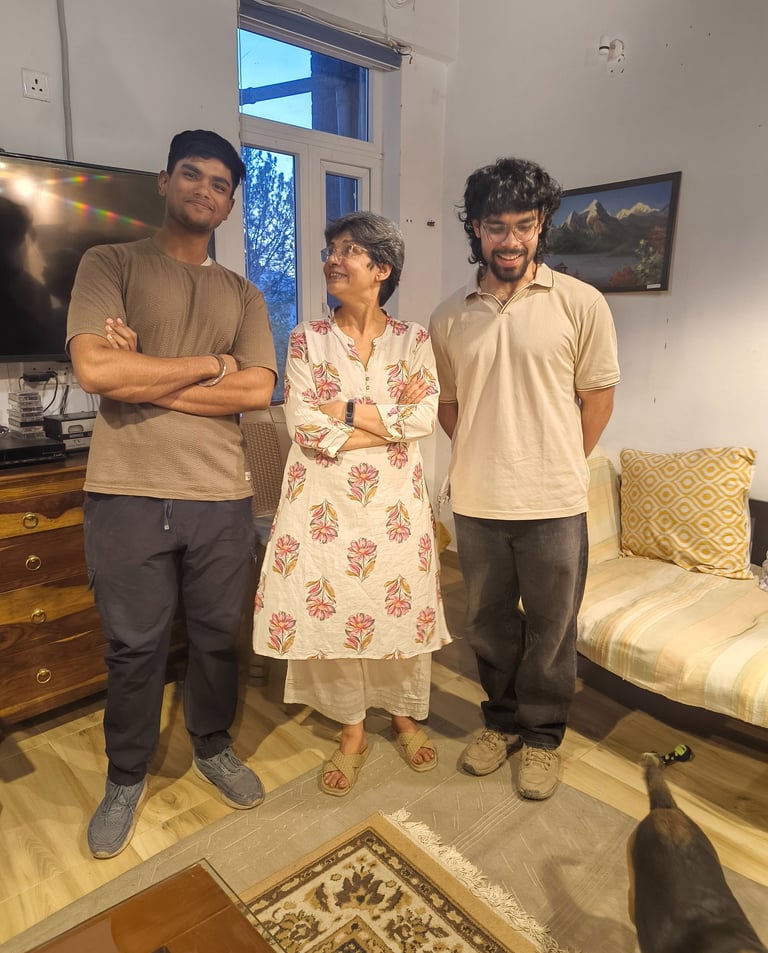

From left to right- Siddhant, Ms. Amala Rai and Abaan at BLISS
Night.
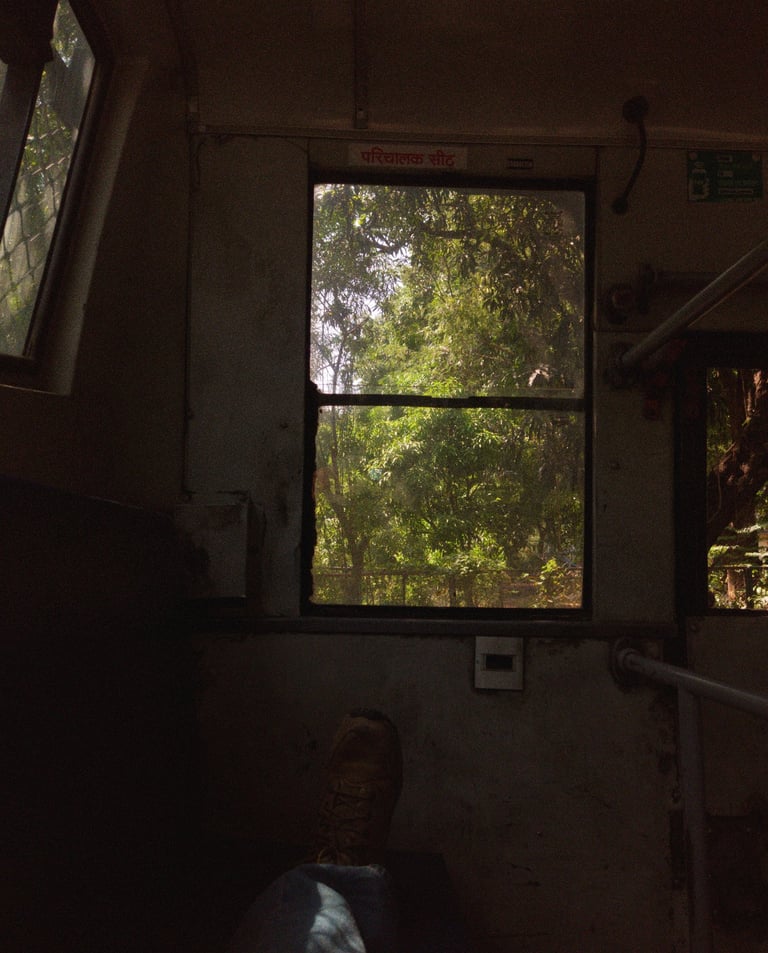
View from the backseat of the ordinary bus.
Siddhant and I left in the morning without booking a bus ticket. We had asked and inquired beforehand regarding which bus to take. We should have taken the Volvo, as advised by Ms Amala Rai. We didn’t; we got a Himdhara bus instead-a lower-tier AC bus which is only slightly more expensive than the ordinary non-AC bus. We asked for a ticket to Dharampur, and a fare of ₹575 was deducted. Immediately sitting in an AC bus almost always reveals its true colours: the AC didn’t work and the windows didn’t open. Three hours into the journey, a passenger got sick. She was taken to the hospital, and the bus passengers were shifted to another non-AC bus at the nearest dhaba where the buses stop. Sitting in the bus running at 80 km/h, we realised that we were missing the simple pleasure of May 2026’s loo, which was more refreshing than the barely working AC in the Himdhara bus-except for the urine smell near the back exit. The extremely jumpy bus ensured that we were barred from any chance of resting our buttocks on the extremely shiny PVC seats. As much as one would like to write an expressive memoir of a less-than-ideal bus travel experience, I trust that it can never be better than Harishankar Parsai’s “Bus ki Yatra”, which documented the experience of a truly dilapidated bus. Only in Chandigarh did we get the chance to eat our lunches, when the bus stopped at the signals. Soon I fell asleep when the wind dropped to a lower temperature, once the bus was past Chandigarh on the way to the hills. I woke up in the hills, and they looked as if they were balding. Affected by the severe heatwave and soil erosion, the trees were sparse, and indigenous fauna seemed limited. Concrete shops of HPMC, hotels, and Baristas reigned supreme as the modern environment. It was still better than the plains, though.
Through ups and downs and a dehydrated, minimal-food journey, we found ourselves near a dhaba without a washroom. Not that we needed it; most of our excretion happened through the sweat glands, with disposal powered by the evaporation of the North Indian loo winds. The driver seemed confident enough in his abilities to not crash the bus and proceeded to constantly exceed speed limits, almost crashing into another truck while trying to overtake it. I had been seated, but my friend was just getting up from his seat when the abrupt braking really did his work for him. Fortunately, he wasn’t hurt too much, but he was hurt nonetheless. Also, he broke his pendant in the process, which I find quite fortunate, as it was to women what Odomos is to mosquitoes. It was a blessing in plain sight, as his entire get-up was levelled up in the pendant’s absence. I wonder if the driver thought the same.
Ms Amala had the lights off by 9:00 PM, a testament to her 4:00 AM wakeup time. Our room was upstairs, featuring that extremely large balcony. We sat outside to look at the stars. Soon enough it was midnight, and the breeze grew colder. We went inside and slept.
Dinner
After Siddhant went up to the second floor for a shower, Amala Ma'am and I talked about my college life. It was evident that she had a much more eventful life during college and her NSD days compared to me. I mostly came to college for classes and left quite early before the rush hour could start. Being a day scholar leaves me commuting three hours a day. Then I showered. Later, we had dinner. It was very delicious, and we decided that if we were getting such healthy food, we must reciprocate by cooking something that could be remembered by Amala Ma'am. Ma'am was excited to have us try Pahadi Kadhi-which was made with buttermilk (छास/छाछ/मठा) instead of dahi.
During our dinner conversation, it was revealed to us that the entire dinner was cooked from scratch, with each ingredient sourced from Ma'am’s own farm. We also saw Dhaminder, the farmer who did all of the work (along with Mr Sunil Sinha, though he was currently in Mumbai for work). We decided, through consultation with Ms Amala, that we would indulge in farming or farm-adjacent activities under the supervision of Mr Dhaminder.
May 16, 2026
The wonders of Rauri and coq au vin

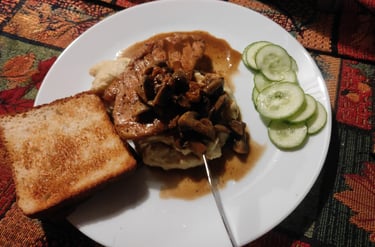
The bus started after a forty-minute wait. I asked Siddhant about the dinner plan. To my relief, he had brined chicken breast and put it in the fridge. We were supposed to pull it out in the evening for a pat-down to make coq au vin (chicken braised in wine) and some mashed potatoes.
We didn’t talk on the bus at all. We just looked at the valley beside us. The road, as I mentioned previously, was under construction and very dusty. Eventually, we reached Rauri, and the bus stopped around 100 meters ahead of the house. So we walked back. We pushed the bell. Ms Amala opened the door, and Liaka the beagle flew out to meet us. Liaka was very cute and an immediate morale booster in the dust-heavy heat.
It was half past two at that time, and Ma'am told us she had already had lunch because we were late. Prompt to inform her of our extra-long journey even though we boarded well before we should have, we told her that the bus didn’t start for at least forty minutes as passengers didn't fill it up.
Soon after, we sat down to have lunch: Pahadi Kadhi with a red tadka of spices, aloo bhindi, and a green chutney of coriander and chili, along with roti and rice. It was a very hearty meal with a variety of textures. It was a good meal. After updating Ms Amala about our visit to Dharampur, she went to rest as she had work in the evening. She takes paid classes for personality development and gives free tuition to her theatre students, one of whom would be coming to take English classes in the evening. We went upstairs soon after and played card games.
Coq au vin- Dinner
The next morning was an embarrassing one for me, as I realised that I do talk in my sleep. Apparently, I conjured up the excuse of having back pain in my sleep just so that I could sleep more. The excuse worked. My friend left me to rest my aching fibres. When I woke up around 10:00 AM and brushed, Amala ma’am had given him the tutorial of the entire kitchen and in the process made him breakfast- Toast with Eggs, sunny side up. I like my eggs scrambles, so that is how I made my breakfast.
The plan for the day was to go to Dharampur for a roam-around session and maybe get something to eat. We left in the morning and were asked to be back by lunch so that we could have the Pahadi Kadhi. Catching a bus right from the spot where we were dropped off, we traveled to Dharampur. We paid ₹20 each again to the bus conductor, but this time it was a different bus with different music. This was our fourth bus of the trip.
Reaching the Dharampur chowk, we didn’t really have anything specific in mind. Walking from one place to another, we reached a lower elevation and, later, had thukpa from a local shop and rhododendron juice from HPMC. Whenever we were met with a dead end, there was always someone to guide us to the right path. The non-touristy nature of the place had a certain charm. It was soon going to be afternoon. We had been out of the house for barely over two hours. The breeze was welcome, but the sun was harsh, so we soon decided to take the bus back to Rauri. After buying some fruits and groceries for ourselves, we boarded. The seats were taken. Grabbing the handles on the bus and listening to '80s Kumar Sanu songs, I suddenly remembered that we were supposed to cook that evening.
Soon enough it was evening, and we took out the chicken breast to cook it. It was around 6:00 PM when we came down to prepare dinner. Ma'am helped us with all the ingredients that we needed.
Siddhant sourced the herbs from Ms Amala’s garden and did the main cooking of the chicken breast, while I did the auxiliary work of washing and peeling mushrooms, boiling potatoes, and whipping them. I also did the tiresome work of tasting the finished dish. Siddhant served the food. Ms Amala found the dish to be very good and video-called one of her friends to make him jealous. She also sent a video of us making dinner to Mr Sunil Sinha. It truly felt like we were successful in making a good meal.
After dinner, we told Ms Amala that we would be ready for tomorrow’s farm work. She informed us to leave by 8:00 AM or 9:00 AM after breakfast.


The hills as seen from the balcony of BLISS.
Stars, a Crash, and Wandering Shimla
We left soon after, around 10:00 PM. It was impossible to reach the restaurant in Solan on time. Fitting our bags into the trunk and saying goodbye to Ms Amala, we headed toward Solan anyway.
Midway, we stopped at a 24-hour highway mart for chocolates. The mart had corporate white lighting with overpriced snacks and a weird station where there was supposed to be a person thawing pizzas and other frozen foods for customers, but I guess no one availed of that facility, so they stopped it. The frozen food was still there, though, in a large fridge. In the car, we talked about our childhoods.
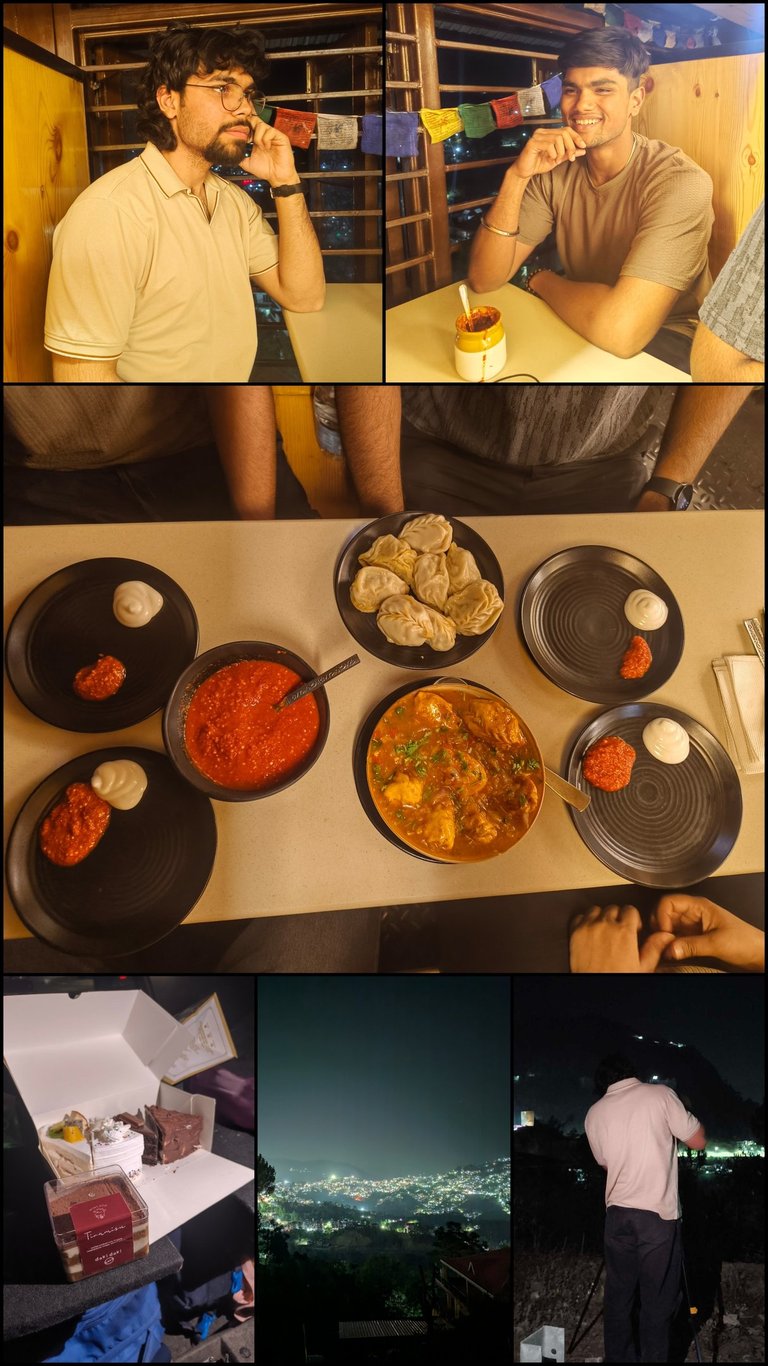
Conversations revolved around school gossip, people we used to know, and other fun things. Soon enough we were near Solan. We stopped the car. It looked as if the sky had given some of its stars to the hills, the landscape twinkling with city lights. The stars were visible too. I took out my tripod, and we all took turns clicking pictures with each other's phones. There is still a debate on which one is the best.
I think it's subjective, but I'll still attach one of the good ones here.

Later, at around half past seven, a call came from my sister. She asked me what I was up to and soft-launched the idea to pick me up so we could go to Solan. The original idea was to go to Shimla the next morning and come back by the following day. Considering that my travel partner Siddhant was flexible in his plans, I was certain that this Solan trip would replace our Shimla trip. I was excited. I let my sister know that I'll tell her in a minute or two, confirming whether Siddhant was up for the plan or not. After cutting the call, I asked Siddhant whether he'd be up for an impromptu trip from Dharampur to Solan in the night, and then maybe a bus to Shimla in the morning. The answer was a resounding "yes", and I immediately informed my sister, who left Chandigarh almost immediately with her boyfriend to come pick us up. I went downstairs to inform Ms Amala of our change in plans. She asked me what time my sister would arrive. I told her the tentative time: 10:00 PM. My sister had shared her live location with me and, honestly, she was moving a bit too fast for me to catch up, pack up, and have dinner. Siddhant and I packed my stuff, had dinner, and got ready.
Amala Ma'am told us about her experience on Mall Road as the years passed. She went to the Gaiety Theatre often, and walking on Mall Road was quite fun as you would see the same people roaming from one side to another. Two hours passed immediately, and just when we had finished dinner, Liaka started barking, and we knew that my sister had arrived.
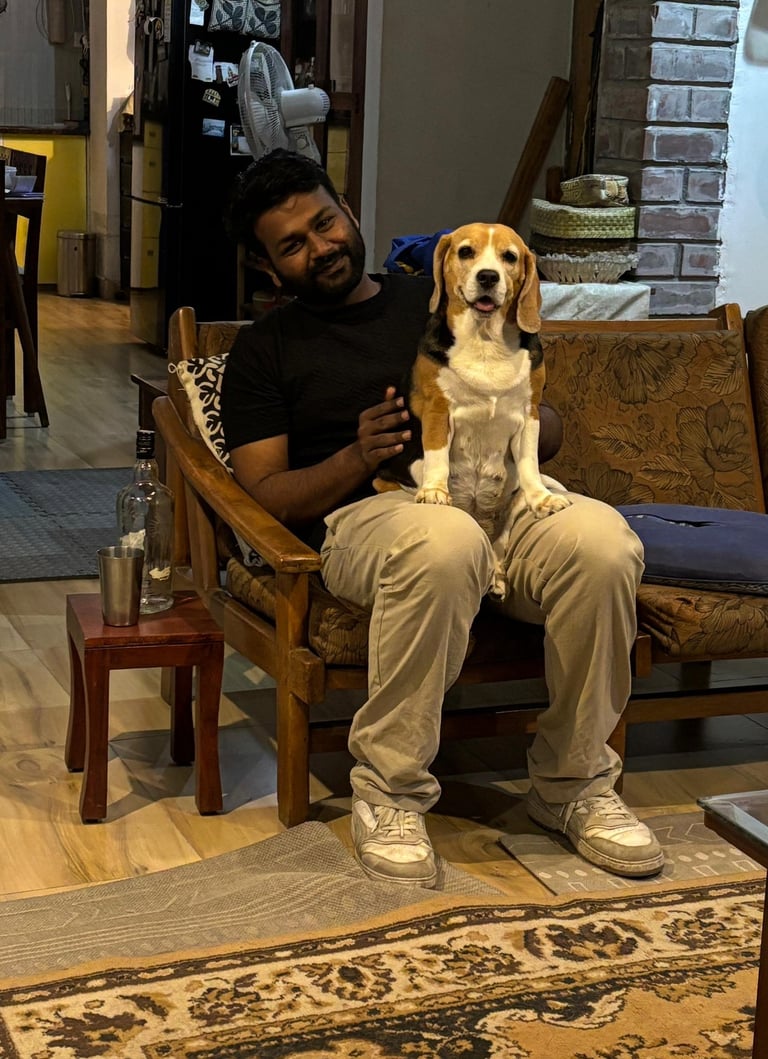
I saw them through the CCTV, opened the two gates, and Liaka welcomed both my sister Farah and her boyfriend Madhur. As Ms Amala sat with the both of them, we packed up our stuff. Packing our stuff into our smaller bags and keeping the larger luggage in the room, we got ready. Meanwhile, Ms Amala gave Farah and Madhur a tour of the beautiful house. Liaka accompanied Ma'am throughout the tour. Liaka also took a certain liking to Madhur, witnessed by all of us when we were downstairs; she simply sat on Madhur's lap. This was significant as she was friendly, but not overly affectionate to anyone other than, naturally, Ms Amala. The plan was to go to Solan to a particular restaurant from which the view shows the toy train passing through. Later, we would find a stay in Solan or travel to Shimla via bus, allowing my sister and Madhur to travel back to Chandigarh. Accommodation was to be figured out on the way.

May 17, 2026
Farming in Rauri and Impromptu trip to Shimla
We wanted to know what kind of food Mr Dhaminder ate so that we could get the same at Dharampur. Mr Dhaminder did not really have an answer for us; he seemed unbothered by our food-related conversations. But eventually, he did open up, talking about how eating outside does not really make sense since everything is of low quality now. We agreed with him, even though we were planning to go to Dharampur to eat outside food later.
Ms Amala talked about the importance of giving back to the land, which I completely agreed with. In Amala’s Programme for Theatre (APT), the workshop attendees also do shramdaan-giving labour back to the land from which we came. Everyone who is able-bodied should try to contribute labour. It is a win-win for both the land and oneself. After lunch, we left for Dharampur where we got ice cream from the 24-hour spot near the highway, along with some instant noodles so that we could cook them in Shimla-we planned on staying at a hostel, and usually, hostels have a place to cook. As soon as we sat down to have our ice cream, we were immediately drowsy and starting to fall asleep. If we had stayed a minute more there, we would have definitely fallen asleep. We were tired from the morning-physically exhausted, even.

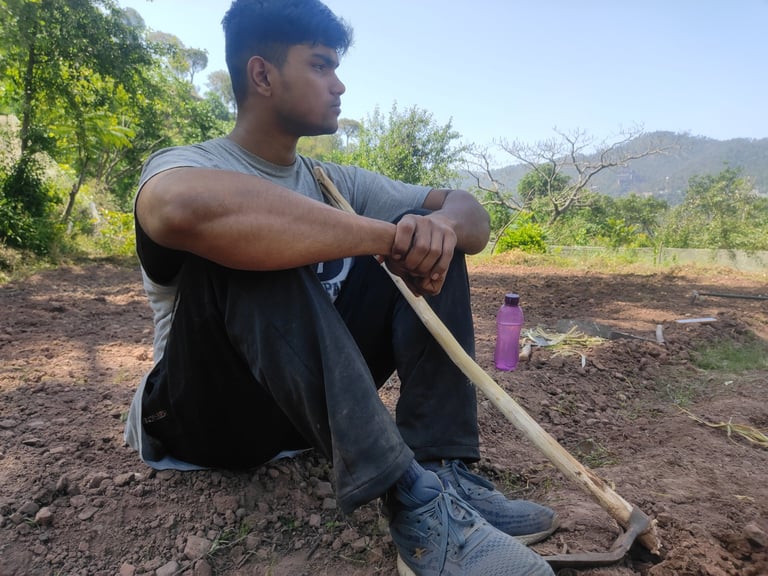
Siddhant soaking in the views of Rauri.
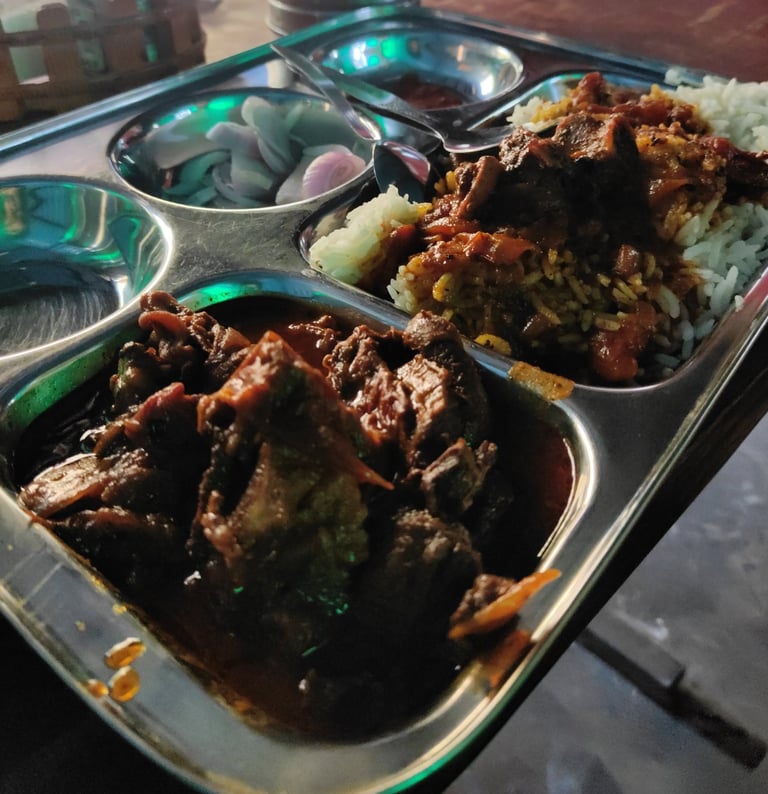
Rice and Mutton at a butcher shop in Dharampur.
Liaka showing an exceptional liking towards Madhur by sitting on his lap
The Sunday morning started with a breakfast of eggs. We took two water bottles and left for the farm. Heading down the four-story house, we eventually reached the ground floor, where we walked according to the directions of Ms Amala, who was watching from the second floor of the house. We reached the shed where we were supposed to meet Mr Dhaminder, the farmer. We called him, and he came to pick us up. We walked beside him and eventually reached the farm, where a pickaxe was handed to each of us, and we tilled the whole farm.
We decided a walk around the town would be nice to digest all the food. We walked down one alley, and then we walked down another. We saw Dharampur’s railway station. We saw different homes, some bigger, some smaller. We reached dead ends, and then we headed back to Bliss. After a while of hanging out downstairs with Ms Amala, we went upstairs. Siddhant rested, while I showered. Around 7:00 PM, beaten by the morning’s digging, I was on a call with my mother after taking a shower. I updated her on our morning farm visit with Mr Dhaminder and then the Dharampur visit. Siddhant was asleep.


Abaan with his tripod
We took rests, tilled the soil, and took more rests from 9:00 AM until 12:00 o'clock, around which time Mr Dhaminder took our help to create lines in the soil to sow seeds or saplings later. My moisturised city palms did not take a liking to the wooden handles and I soon got a blister. My body had more to give, my technique had more to dig. I even got approval from Mr Dhaminder that I was working good, an approval which Siddhant didn’t receive. I said to Siddhant, “If only we had gloves, man”. Siddhant agreed, “If only”.
My shoes were filled with red soil; I emptied them and cleaned my socks. At around 12:00 noon, we left with Mr Dhaminder after seeing the entire farm. There were new ginger saplings of ginger already planted. There were different trees as well-I saw one banana tree and another, of peach. Garlic had been harvested, and the shed by the farm was filled with it, emanating a pleasant garlicky smell. Brinjal and garlic were given by Mr Dhaminder in a bag for Ms Amala's review. Turmeric, Tomato, Capsicum, Arbi, Rajma, Arhar, French Beans, Bhindi, Pumpkin, Lauki, Kheera, Turaiya are the produce Ms Amala grows in her farm. In winters, various leafy greens are also grown. We walked back up to the house, Mr Dhaminder following us, and we looked at each other’s hands and laughed, “If only we had gloves, man. We could’ve tilled everything” We came back to the house, talked about our experience on the farm and had lunch. We told Ms Amala about our blisters, “We wanted to, and could’ve done more work if only we had gloves, ma’am.” Ms Amala looked at us and shrugged, “You should’ve asked for them, they were in the shed!” It was very funny. After all, we didn’t ask Mr Dhaminder!
We decided that we should try some local food, or any food available for a relatively okay price. We stopped at a fast-food place where many people were sitting, so we sat down too.
We ordered chicken momos; the momos were big, but they were alright at best. The alley in which we found ourselves was one we discovered on our second day in Dharampur. All other places in Dharampur only had vegetarian food.
We saw a butcher. At the butcher shop, there was also cooked food available. They had two large pots and a large tawa on which fried chicken was kept. So we ordered mutton. We were given a hefty portion of rice-which we could get refills for-and a hefty portion of mutton. It was gamey. It was solid, dark in colour, and almost bitter. It felt like the type of dish one would eat after being thoroughly tired, which we were. As soon as our plate started getting empty, they filled it up with more food. We were glad that we shared only one plate; otherwise, we would not have been able to finish the mutton.
One particularly intriguing situation occurred when a customer came into the butcher shop wanting chicken, but the young man working as an employee in the kitchen was not able to cut the chicken the way the customer wanted. The man owning the butcher shop was somewhere else, otherwise he would have done the work. So the customer came inside, butchered the meat himself to his own liking, paid for it, and left.
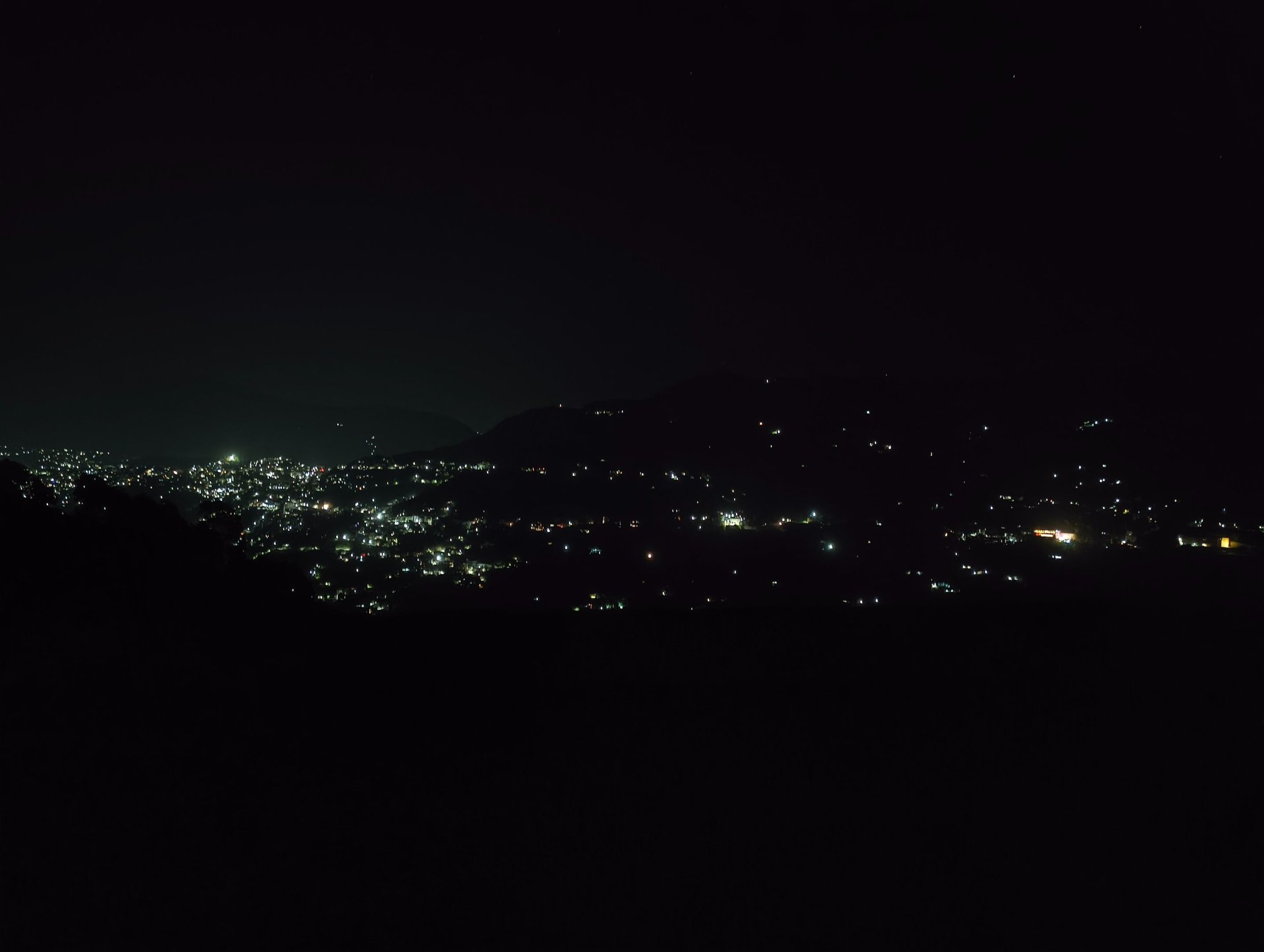

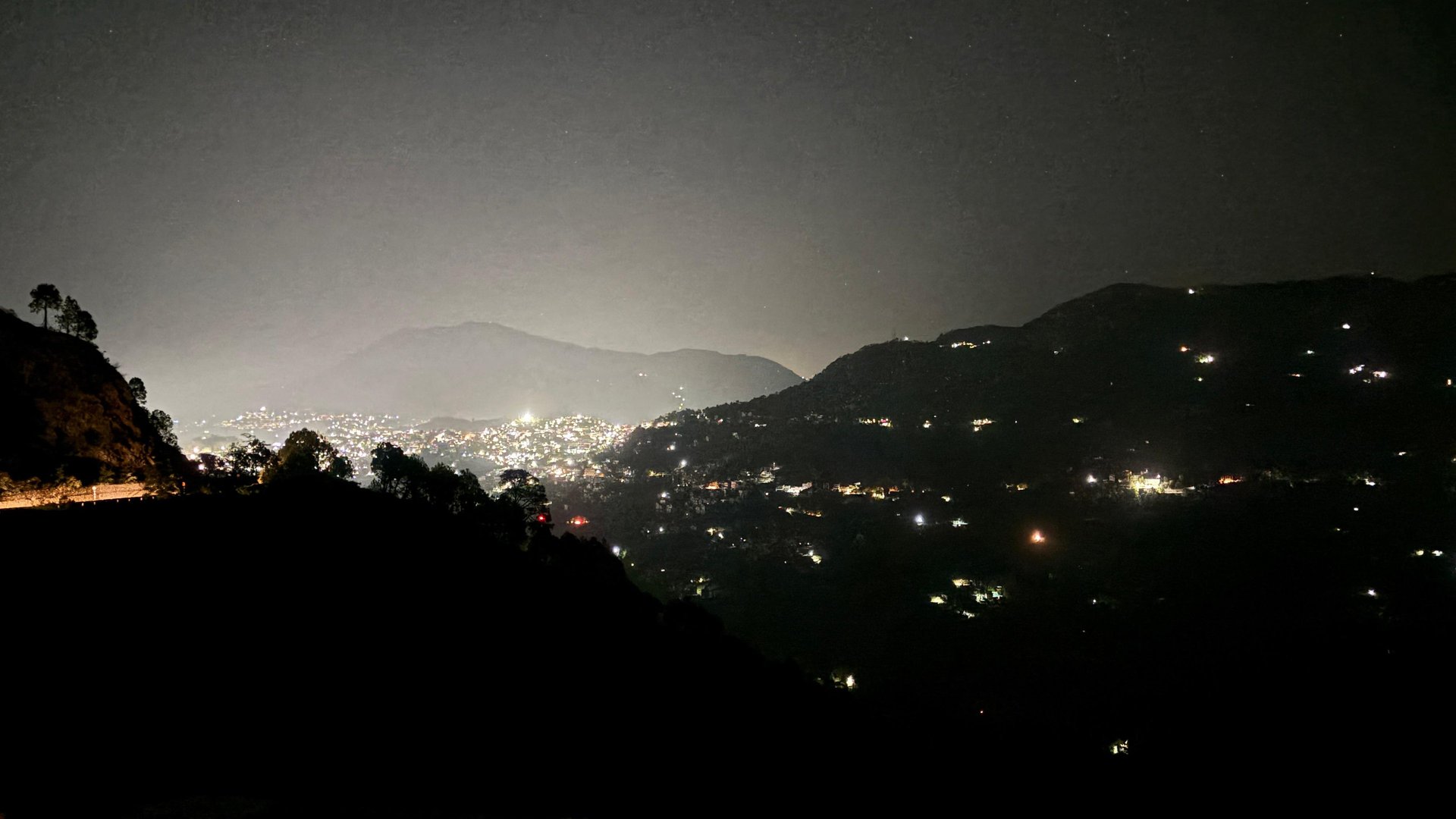

We headed into Solan, a city deep in its sleep. It was midnight, maybe even later than that. We came to the toy train track, where we stopped to witness the sheer emptiness and silence the place withheld. From that silence came a crash. We looked towards the sound. A scrawny man in loose clothes had crashed his scooty.
We headed toward him. Just as we came near, we saw that he had just puffed something-maybe a cigarette-for one last time as he was standing up. Siddhant asked the man if he was okay. I picked up his scooty, seeing drops of blood falling onto the seat. Madhur and my sister headed back to the car to grab drinking water. The man declined help. He was already trying to drive away, saying that he was okay. He was obviously not okay and most likely had a concussion. A biker group stopped by, from whom we took some first aid, and within minutes, an ambulance came. He was carried away safely; the bikers locked his scooty and put the key in his pocket.
It was visceral, the entire scene. We were obviously shocked for a while and concerned, but that emotion passed as we knew he received priority medical care and that his belongings were secure. We can never really know if he suffered serious brain injuries, but what we witnessed was the best-case scenario for any accident. A helmet would have prevented the bleeding and loss of consciousness, though.
We didn’t stay longer in Solan; we headed toward Shimla.
We stopped at a lonely but modern restaurant-Devbhoomi Restaurant. Two young girls were handling the front desk, and we were asked what we wanted. It seemed that it was their first day of working, considering how shy they were while taking our orders. But the food was good. With some paranthas, chai, coffee, sandwiches, conversations, and stories, we were ready to hit the road.
Toy Train Track in Solan


Chai at the restaurant stop
Chai pe charcha
May 18, 2026
Jhakhu Temple, A sketchy middleman and Himachali Thali
It was just before 3:00 in the morning of 18 May. We left for Shimla and didn’t stop anywhere.
We headed straight for Jakhu Temple, and it was Delhi-in-February cold at the peak. I was never fond of the thin, curvy roads. I didn’t get motion sick; instead, I was just genuinely scared. Unless I am walking on those roads, it always feels like an amusement park ride.
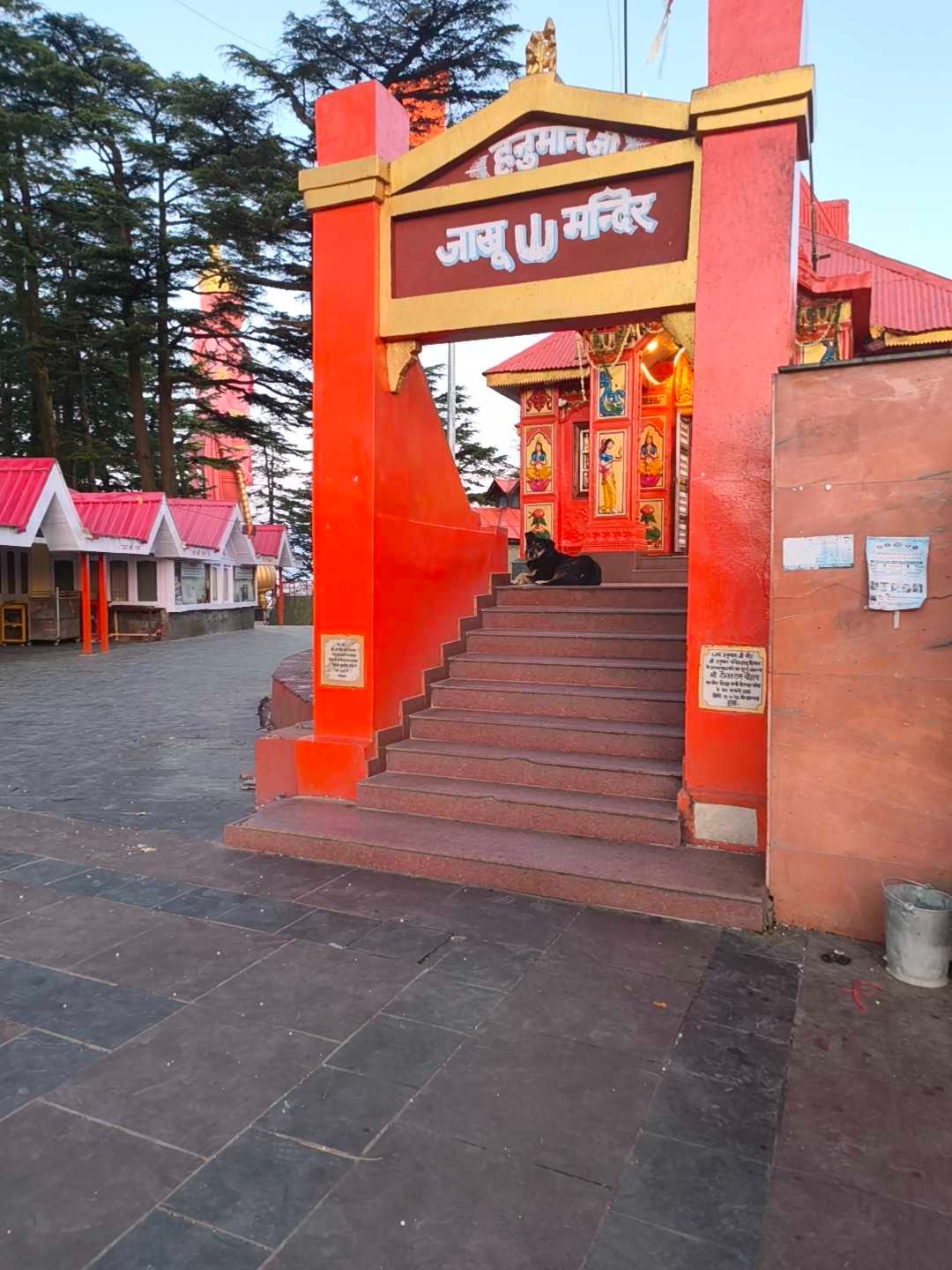
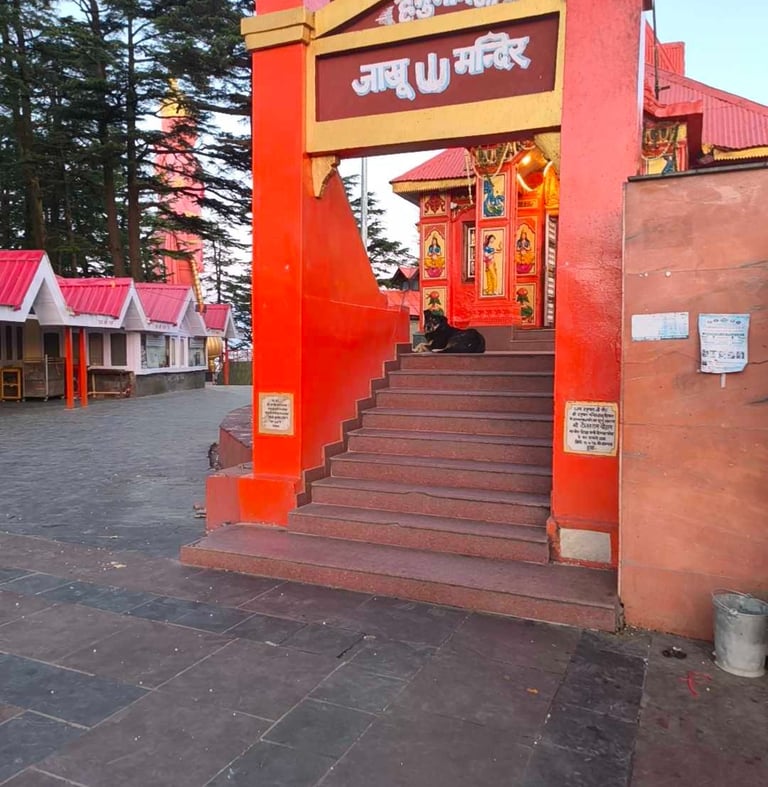
We were among the first to reach the Jakhu Temple at 5:00 AM sharp. An abundance of monkeys was observed. There were also young people and old people seemingly completing the entire trek, which we skipped. We only completed the 300 stone steps. Reaching the temple, we had to take off our shoes, keep them in a dedicated storage room, and walk on the chilled marble floor. The morning rituals were underway. The silence isolating the chants kind of shook my brain, causing a certain feeling of vertigo.
We left soon after. Heading toward the Indian Institute of Advanced Study (Viceregal Lodge), I fell asleep. When we reached there at around 7:00 AM, we were made aware by the guards that it is completely closed on Mondays. I fell asleep again after having a chocolate. Man, was I glad I was not the one driving. I was still tired from the morning before when I tilled the soil.
It was around 9:00 AM when we were finding accommodation. When we found a middleman who knew the place, we made a potentially risky choice by taking him with us for directions. He took us to a steep place and a bad hotel, but we were able to find better ones for the same price now that we were in the area. We ditched the guy and got a decent hotel room, even though we had been looking for hostels. After all, only one night was to be spent there. It was around 9:00 AM, and Madhur and my sister were now leaving Shimla. Siddhant and I would leave Shimla for Ms Amala's home in Rauri village the day after.

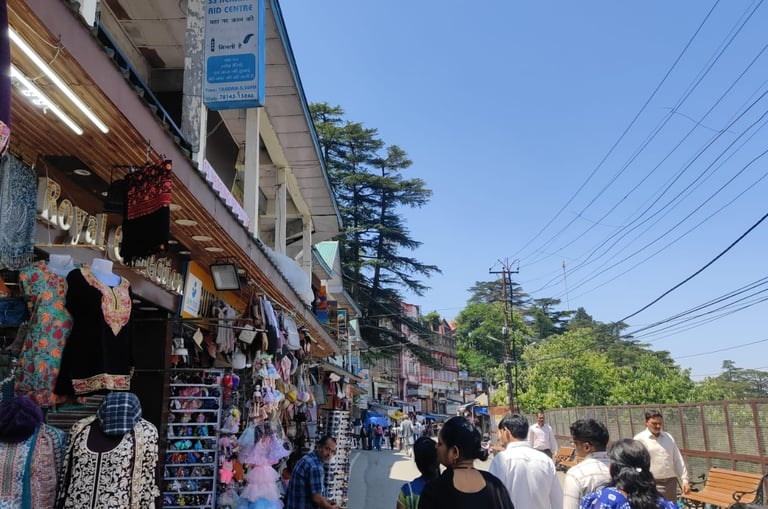
After saying goodbye to both of them, the two of us headed to our hotel room, from where we walked a couple hundred meters of steep uphill road to reach Mall Road and The Ridge-a consumer's dream tourist spot. Shoppers were already sprawling, and we were about to become part of the crowd.
After walking and eating everything that was recommended to me by Siddhant, we only became more disappointed as time went on. The sleep deprivation didn’t help. The crowd didn’t help.
We needed real food, but we only had snacks-chole bhature, pastries, chicken patties, kurkez, brownies, the whole shebang. I was more interested in a Himachali thali. But we were too full of low-quality stuff to actually get real food. So we went back to the hotel post-noon and slept.


When I woke up, Siddhant was nowhere to be found. A call to him revealed that in the process of contacting his family and telling his mother that he was in Shimla, he had walked a bit too much and landed back on Mall Road. It was dark now, and all I wanted was some good food.
We met at the restaurant “Himachali Rasoi” for Kangri Dham. I was satiated.
At the place, you get rice, badana, khatta, black dal, madra, and a couple of things more which I don't remember. It was delicious; I would go there again. Siddhant's opinion on the dinner was “mediocre”-which was simply a wrong opinion. We headed back to the hotel room in the quiet, dark evening with slow steps. Shimla was beautiful in the morning and was even better at night.
The same roads that looked lively and crowded during the day felt completely different after the sun went down. The lights on the hills, the chilly breeze, and the quietness of the town gave it a different kind of charm.
Walking back after dinner, there was a strange sense of peace in the air. The day had been simple- good food, conversations, and exploring a little corner of the hills- but somehow those are the moments that stay with you. The mountains have a way of slowing everything down, making even an ordinary walk back to the hotel feel special.


Early morning view of Jhakhu Temple, Shimla.
Busy lane of Mall Road- Shimla.
Snaps from our first day in Shimla.
Himachali Thali at Kangri Dham
Waking up in the morning, we got ready to leave as checkout was at 11:00 AM. In the midst of packing up our stuff, we forgot where Siddhant's lighter was. We emptied all of our bags, and the lighter was found separate from the bags, stuffed somewhere in the bedsheets. When we were heading out, we couldn't seem to find the keys to our room, and panic ensued again. The keys were found hanging outside the door in the lock. We laughed and shrugged off the comedic situation, and checked out of the hotel.
We headed to the Mall Road as we were supposed to get a local bus from the old bus stand to the new bus stand, and then any bus heading toward Chandigarh-as it would have Dharampur on its way. But before that, we went to get thukpa from a shop that had AI-generated dragon imagery as decor. The thukpa was gentrified and mediocre at best, considering I've had much better for a lower price in Delhi at Dave's in Humayunpur. Naturally, the thukpa was approved by my good friend, and we were on our merry way to the Gaiety Theatre. On that day, there were no plays happening, but fine arts students had their creations up for sale-frames, keychains, resin-based decor, paintings, and crocheted creations. It was fun to socialise with them. They were BFA and MFA students of the Jawaharlal Nehru Government College of Fine Arts.
It was around 2:00 PM when we headed toward the bus stand. To get there, you head down the Lower Bazaar, which is vastly different from the Mall Road. One will find most affordable commodities here. But most food was vegetarian, so we didn’t stop to get anything. We stopped at an omelette-paratha shop, where the chef's proximity to the large flame seemed like something you'd see only a stuntman doing. We sat down and had three eggs and two rotis each-a relatively filling meal. Inexpensive. Both agreed that it was good. We moved further and downward into the Lower Bazaar. The steep roads had us hopping down easily. The people climbing up had a separate story, though.
Stopping at a souvenir shop, Siddhant got a magnet for himself, and the shop owner, most welcomingly, told me, “It always rains when the internet says it will. Today is not that day,” upon my declining his magnets. It was surreal, to say the least. Maybe each time a customer didn't buy his magnets, an angel got its wings. We moved downward.
Eventually, after having the worst and simultaneously the cheapest momos I've ever had in the 2020s, we moved on to have one of the worst kulfis ever, which seemed to be made from the same factory as the momos. The maida was a common factor.
We moved downward and eventually reached the bus stand. Asking a couple of people about the local bus led us to the right path. The only difference from the original plan was that we were supposed to get the second bus from the new bus stand in Tutikandi, but the locals advised us to get the same bus from the “crossing”-the intersection of the local buses and long-haul buses on the highway. So we did the same, and we saved at least an hour, I can imagine. We left a moving bus to get another moving bus. We reached Dharampur earlier than expected. The bus was a private one but cost the same as an HRTC one. It was relatively empty, and we reached comfortably.
We called up Ms Amala and updated her regarding our status. We left Dharampur after getting some groceries. The bus to Rauri was full this time. We stood with our luggage stuffed wherever we got the space to keep it, keeping the groceries near and dear to us. A ₹20 fare, and we had reached Rauri in no time. It was almost 5:30 PM. We updated Ms Amala regarding our travels, and the absence of the Indian Coffee House from our list of visits disappointed her, causing heavy regret to me. Even crueler was the fact that Siddhant had been there without me. Regardless.
The conversation moved to the topic of Subathu Cantonment and the proposition that we should go there and have a look. When one catches a bus from Dharampur, the conductor shouts, “Subathu! Subathu! Subathu!”.
Ma'am suggested the samosas from Kalidas. We decided that we'd go there the next day. In the evening, around 8:00 PM during her walk on the terrace, Ms Amala conversed with us. Conversations ranging from climbing trees to climbing pipes, birthday parties, and birthday bombs-Ms Amala talked of her days in NSD, and how ragging was a necessary part of life and socialisation. But the way she described ragging seemed more of a voluntary prank in which people would participate for morale-building, rather than socio-emotional bullying.
May 19, 2026
Gaiety Theatre, Lower Bazaar and Saying goodbye to Shimla
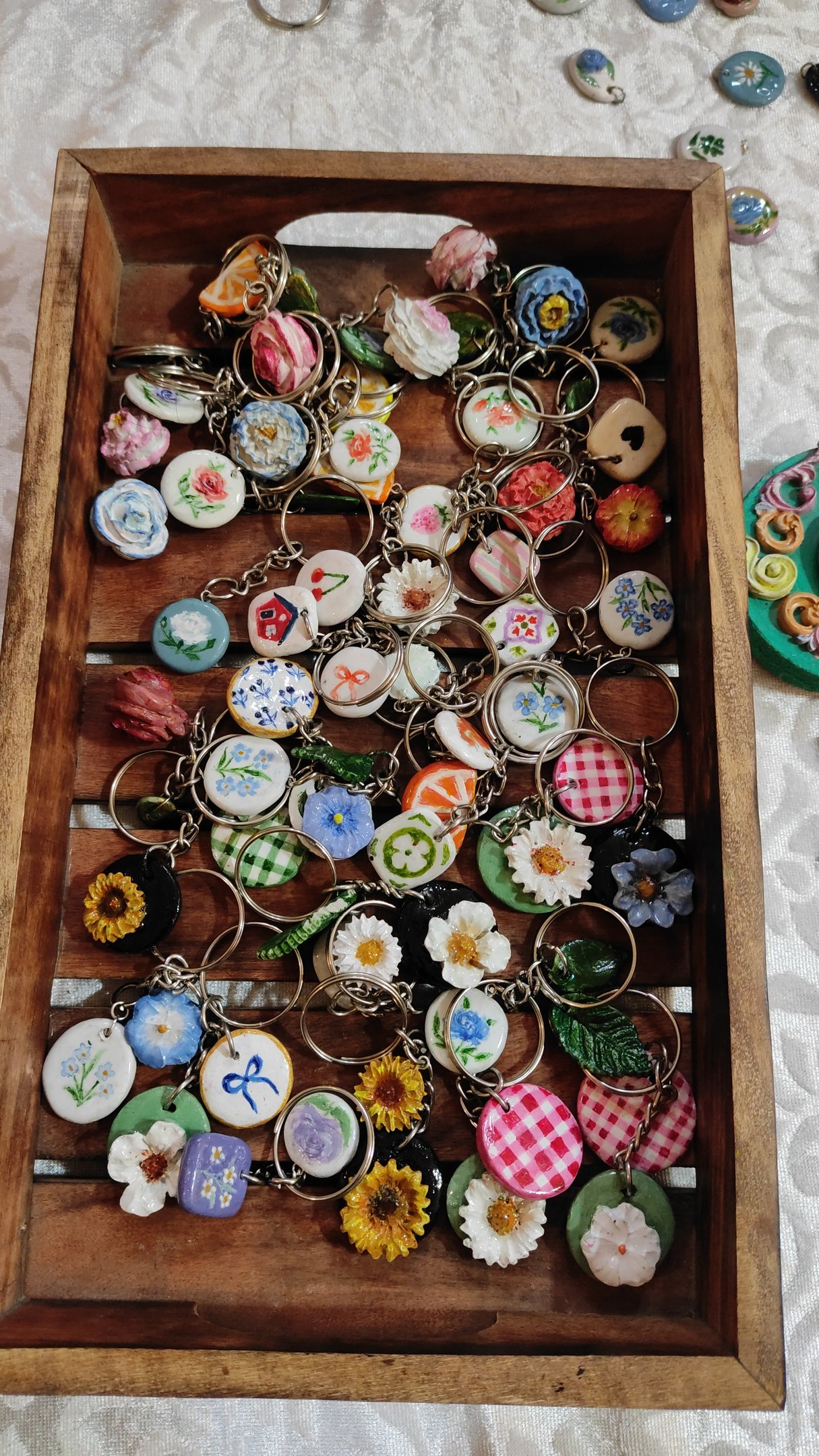

Stall of Resin keyrings anf more by BFA and MFA students of the Jawaharlal Nehru Government College of Fine Arts.
May 20, 2026
Subathu, Solan, and Farewell
After Siddhant made breakfast for me in the morning-egg noodles. We got ready to leave for Subathu Cantonment.
“It's a very pretty little place,” Ms Amala had told us.
It was eight kilometers to Subathu, and buses were not coming at all. We started walking in the direction of Subathu and walked around 2 kilometers before a bus stopped by. We paid the fare of ₹20 and reached Subathu.
There were many posters honoring Gorkha Regiment soldiers.
Subathu was indeed a pretty little place, with even fewer people than Dharampur, a nice breeze, and trees blossoming with flowers. We reached around afternoon, when the school students were leaving. If not for them, the place would have looked much more desolate during the weekday.
Walking around Subathu, we found some pomegranate trees. We laid down in the shade. Not sure if it was private property, but I'm glad no one poked us.
We then went to the shop which Ms Amala recommended to us and got some samosas packed.
We saw shops selling khukris-the signature weapon of the Gorkhas. We didn’t get one, but we were fascinated by them. We sat in the Subathu-Dharampur bus to get off at Rauri.

Midway, my sister called me up and asked about my plan for the next day. I told her that we would be leaving the next morning for Dharampur, from where we'd get an ordinary bus to Chandigarh and then a better bus to Delhi. “Yahan garmi bohot ho rahi hai, mai soch rahi thi thoda pahaad ghoom le,” my sister said. She was going to come pick me up, and I was delighted. It was impressive the travel endurance my Sister and Madhur had. I always look forward to her company, and since our last meeting with Madhur I was looking forward to meeting him too. I told Siddhant, and he was excited too.
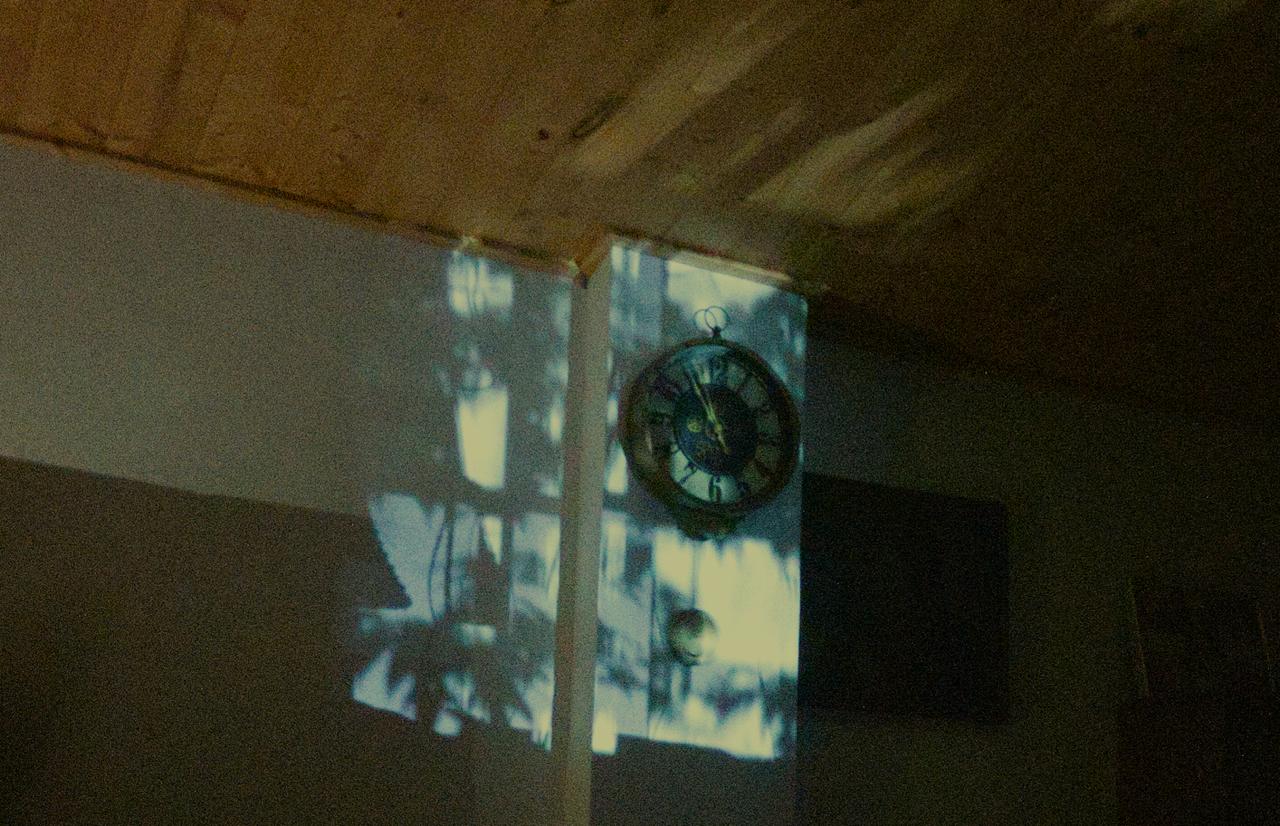
We reached Ms Amala’s, told her about our plan, and she asked us whether we'll have dinner or not. We obviously said yes. All the meals that we had had at Ms Amala’s were top-notch. We looked forward to each meal and ate heartily. By evening at 7:30, my sister arrived, and we made chai. We packed up all our stuff as this would be goodbye for the meanwhile. Farah, Madhur, and Ms Amala talked downstairs. Upstairs, I looked outside the balcony for one last time, watching the lights turn on slowly-the hills looking like the sky, twinkling. I looked at the cozy room where I spent my days. The small bookshelf from which I browsed books, the pendulum clock on the wall which would be the screen for the refracted lights in the night-all of which I was saying goodbye to. We closed the door of the upstairs room and came downstairs. Ms Amala was giving a tour of the beautiful garden she maintained at the entrance of the house and on the upstairs balcony. The various herbs and flowers that were growing with constant attention smelled amazing.
We left soon after, saying goodbye to Ms Amala.

Heading toward Solan, we didn’t stop at the stargazing spot we had halted at previously.
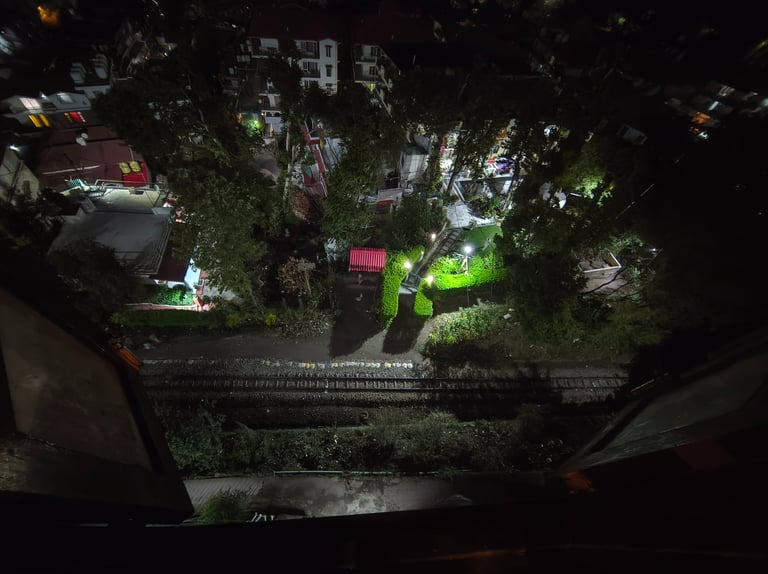
We headed straight to the Friend's Corner 2 restaurant so that we could see the toy train passing through from the window.
We ordered some momos, both steamed and gravy, and some chicken spring rolls along with some soft drinks. The momos were the biggest and juiciest I've ever had, and the spring roll was the first ever which didn't try to scrape the flesh off my mouth.
Soon enough, a toy train passed through the window slowly. Pretty cute.
After leaving the restaurant, we headed toward the pastry shop where my sister always goes. We got different pastries for each on of us and cakes for our homes.
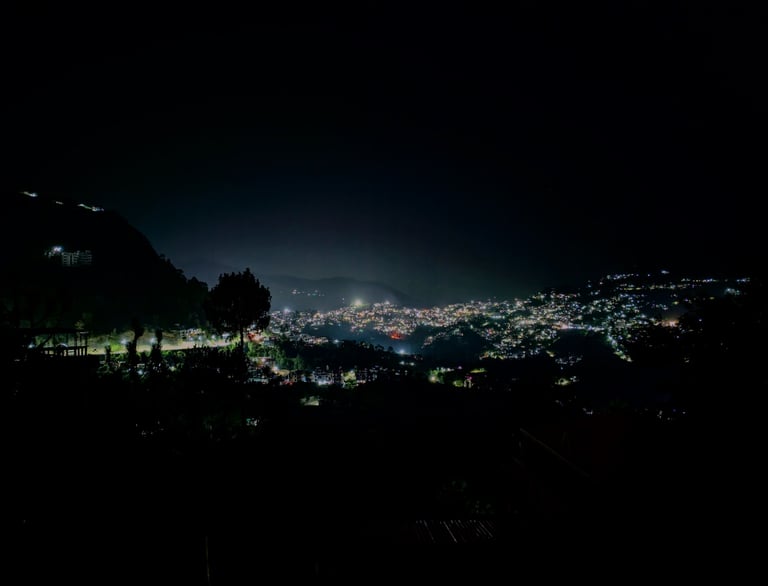
After getting pastries, we left for a spot where Solan could be seen clearly from the highway. Stars on hills, it looked like. We stopped there. Clicked some photos of the view and ate pastries there.
We saw a wildfire growing. It was quite far from us, but we knew that wildfires often travel fast. It got bigger quickly. We left soon after.

After finishing our dessert and heading toward Chandigarh at around 10:00 PM, we booked a bus for Kashmere Gate ISBT, New Delhi.The bus was delayed, and we spent our time loitering around a highway corporate fast-food junction. They only had working drive-thrus, and customers couldn't sit inside. After half past 12, the bus arrived at the designated spot. We said goodbye and boarded. It was a Volvo, and an extremely well-conditioned one. We reached Kashmere Gate around 5:00 AM. Slept through the whole bus ride. It was a good trip.

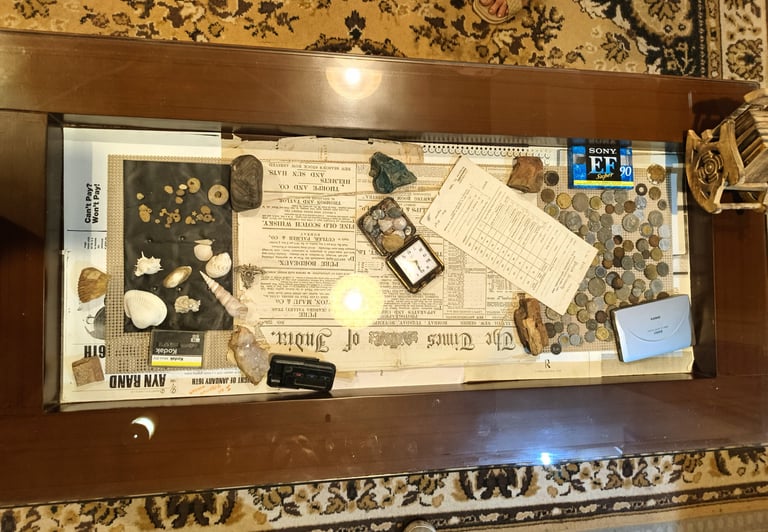
Center table at Ms Amala's home preserving all sorts of antiques.
Trip from Dharampur to Solan's restaurant and back to Chandigarh
The toy train railway track visible from the window of Friends's Corner 2 in Solan.
Solan- Where the hills twinkled like stars.


The Pomegranate tree at Subathu
Contact
Let's bring your stories to life.
Phone
memorywalamail@gmail.com
+91 9818-098-790
Designed & Developed by Farah